

Programmes
What we do today. What we aspire to next.
Four programmes the Foundation funds now, delivered with the Indaba Institute, and the ambitions we hold separately from them.
Today
Four programmes, one pathway.
Each depends on the others. Training without mentoring fades; mentoring without facilitators cannot scale; none of it is worth funding without evidence.
CoRE practitioner training
Seven months of Montessori-rooted training for women who run community early childhood centres.
Read moreMentoring and centre support
Facilitator visits during and after the programme, until new practice holds.
Read moreGrowing facilitators
The pathway from graduate to Facilitator-in-Training to the people who train the next cohort.
Read moreIndependent evidence
Child outcomes assessed independently, and the move from snapshot to studies over time.
Read more
01 · CoRE practitioner training
Seven months. One week a month. In their own community.
Community Rooted Education enrols women who already work in early childhood centres. They stay employed throughout, returning to their classrooms between modules to practise what they have learned.
Training is delivered in the language of the community: isiXhosa, Afrikaans and English have all been used, so that practitioners can support children in their mother tongue. Practitioners make their own learning materials from found and recycled objects, so that everything can be reproduced at their centres.
Those who complete the programme receive the Educateurs sans Frontières CoRE Practitioner's Certificate. CoRE does not replace the curriculum a centre already uses; it changes how the adult sees the child and prepares the room.
The first South African programme ran in Kayamandi in 2021; Klapmuts followed. In 2023 the Institute delivered seven programmes, and in 2025 a new Kayamandi group began with 35 teachers and principals from 31 centres. More than 500 women have now trained through CoRE, from more than 500 centres.

CoRE so far
500+
women early childhood teachers trained so far
As of October 2026
500+
early childhood centres supported so far
As of October 2026
7
CoRE programmes delivered in 2023
As of 2023
5 000+
children in the care of CoRE practitioners in 2023 (estimate)
As of 2023
Teachers and centres: Indaba figures, October 2026. Programmes and children: Indaba Impact Overview, April 2024; the children figure is a reach estimate whose counting method is not stated.
02 · Mentoring and centre support
A workshop is one part of a longer process.
Facilitators visit each participating centre during the programme and for at least five months after the final module. Every cohort keeps its own group going, indefinitely.
At each visit a shared checklist for practice documents what has been implemented and what still needs attention: whether materials are within children's reach, whether routines give children real choices, whether the adult observes before intervening.
The 2021 proof of concept taught us why this matters. A meaningful shift in practice was possible within 24 days of training, but it was not sufficient on its own. Direct, individual support to practitioners in their centres proved essential, and it was built into every programme since.
In 2023 facilitators made 892 centre improvement visits and gave 672 hours of mentoring and coaching, with a further 102 hours after programmes ended.

03 · Growing facilitators
Graduates can become the people who train the next cohort.
CoRE is designed as a tiered system. A practitioner who has implemented the approach in her own centre can progress, step by step, to training and mentoring others in her community.
Facilitators-in-Training work alongside the lead facilitators on CoRE programmes, supporting trainees during the modules and mentoring them in their centres. The commitment is a year: the seven monthly modules plus around 70 further hours of community building and centre visits. Running facilitator training in tandem with practitioner training is what makes the model scalable without diluting it.
In June 2026 CoRE was delivered by five active facilitators. Growing that number, carefully, is one of the Foundation's priorities.

The pathway
From practitioner to trainer, in eight steps.
EsF CoRE Practitioner's Certificate
Complete the seven-month programme.
Implementation
Demonstrate the approach in her own centre.
Apprentice
Take part in two to three CoRE programmes as an apprentice.
AMI Orientation or Assistant certificate
A first Montessori qualification through the Institute.
Facilitator-in-Training
Two to three programmes supporting trainees and visiting centres.
CoRE Facilitator
Lead training and mentoring.
AMI diploma
A full Montessori diploma through the Institute.
EsF CoRE Trainer
Train facilitators.
The facilitators
The people who deliver CoRE today.
Listed on the Indaba Institute's community page, October 2026.
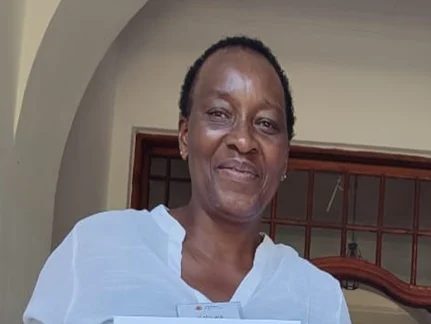
Xoliswa Bala
CoRE Facilitator. Extensive Montessori classroom experience and a background in teaching isiXhosa.
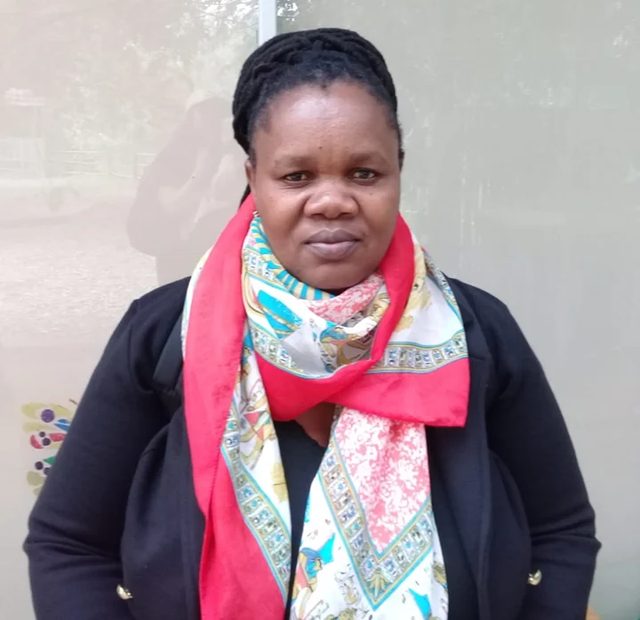
Piliswa Baliwe
CoRE Facilitator. Began her Montessori journey at Auburn House with a 3–6 diploma; classroom and community experience.
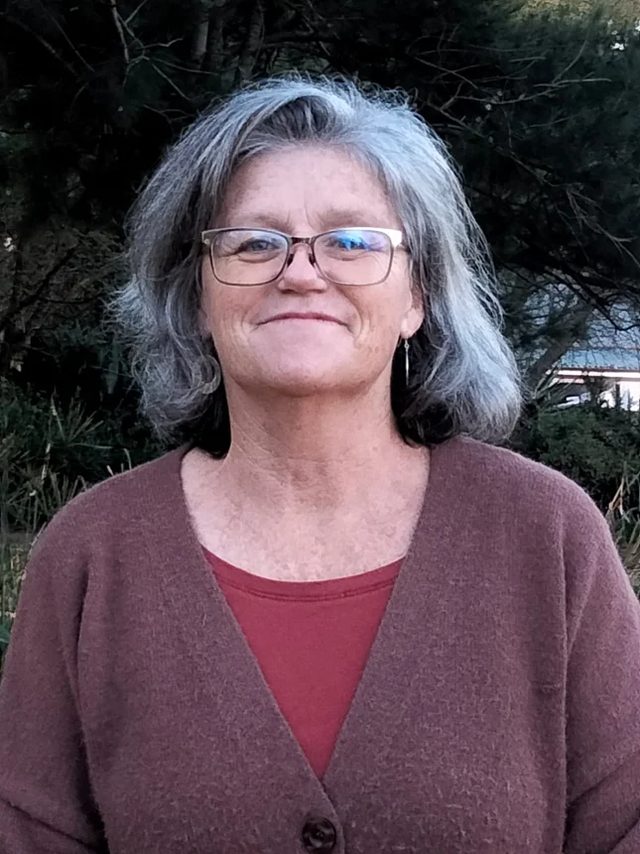
Claire Goffe-Wood
CoRE Facilitator. AMI 0–3 diploma holder and former Montessori school co-owner, focused on the earliest years.
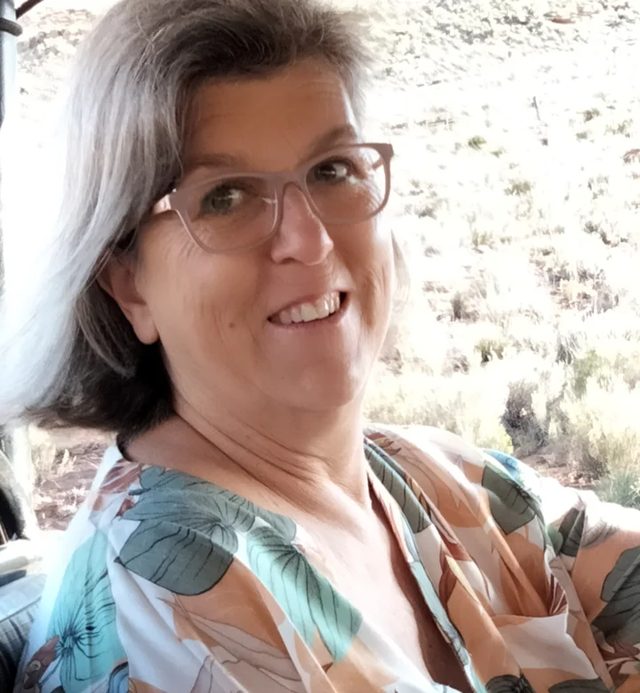
Emma Medell
CoRE Facilitator. Years of work with children aged three to six and co-running a Montessori school.

Colleen Erasmus
CoRE Facilitator.


04 · Independent evidence
Paying for the measure as well as the work.
The Foundation funds independent assessment of children's development so that the organisation, its partners and its donors can see what is changing, and what is not.
In June 2026 an independent and accredited ELOM assessor assessed 48 children aged four and five across 15 CoRE-affiliated early learning programmes in Kayamandi. It was a once-off snapshot. It found 81 per cent of the children on track for their age overall, with literacy and numeracy strongest and gross and fine motor development weakest.
The next step is to fund studies that follow the same children from baseline to endline, so that a striking result can become a defended one.

Also
Earth stewardship and nutrition

In 2023 the Institute rolled out an Earth Stewardship and Nutrition curriculum covering nutrition, permaculture, biodiversity, environmental awareness and personal health, designed to benefit children in their vital years of development and the personal health of the women who lead their care. Care for the Earth is also woven into CoRE's second module.
As of · 2023
Where
Kayamandi, Klapmuts and the Cape Winelands.

CoRE in South Africa began in Kayamandi, Stellenbosch, chosen because it is broadly representative of the educational and social needs of communities across the Cape Winelands. Klapmuts followed at the request of a graduate. Stellenbosch Municipality provided transport, catering and venues for both, ensuring that the training was accessible to participants who otherwise would not have had access to it.
The model is designed to be delivered in partnership with local municipalities, drawing on their existing mandates, infrastructure, people and budgets, so that it can be offered in any community in South Africa.
CoRE work has also been identified in Mkalama and Zanzibar, Tanzania, as separate cohorts. We will report on it once the field reports have been reviewed.
What we aspire to
Ambitions, kept apart from achievements.
Stated goals (2024)
- Reach 200 000 children in the Cape Winelands who are at risk of not reaching their full potential
- Scale CoRE nationally through 2030 through the municipal Delivery Partnership Model
- Grow the facilitator pipeline so that graduates train others in their own communities
A longer vision
- A University of the Child: a campus uniting early childhood teacher training, earth stewardship, children's rights, traumatology, developmental neuroscience, health, the arts, and architecture for early childhood
- Evidence over time: baseline-to-endline ELOM studies at greater scale and rigour
None of this is presented as done. The 200 000-children goal and the 2030 aim were stated in 2024 and are being reconfirmed for 2026. The University of the Child is a vision, not an existing service.
Ambition · planned work, not results yet
Fund the work
Every programme above can be supported directly.
Gifts can be directed to practitioner training, mentoring, growing facilitators or independent evidence, or left to where they are needed most.