
The issue
A beginning should not depend on a postcode.
63
South Africa's Gini index, among the highest levels of income inequality measured anywhere (0 = equal, 100 = unequal)
As of 2014
3 in 10 vs 8 in 10
of the poorest children in early learning programmes start school on track, against 8 in 10 from the richest households
As of c. 2021
25%
of children under six attend an early learning programme regularly
As of 2021
2.5
years behind the curriculum by Grade 3, for learners in the poorest 80% of schools
As of 2015
National figures. They describe South Africa, not Kayamandi in particular, and not Indaba's results. The Gini index is the World Bank's estimate from the 2014 household survey.

Human capability
The first six years build everything that follows.
The human brain develops most between birth and six, forming more than a million new neural connections every second.
What happens in those years shapes how a child will learn, relate to others and take part in society. Yet resources still flow mostly to later remediation, when the most malleable years have passed.
The lever is the adult beside the child. Where she is prepared, the room changes, and the child's chances change with it.
Two beginnings
Excellence is a standard, not a price.
Excellent early childhood practice is usually found where families can pay for it. Its principles are not expensive: order, materials within reach, and an adult who watches before she acts. What a child is given should not depend on what her community can afford.

One standard. Every room.
What travels is not the building. It is the preparation of the adult, and the room she learns to make with what she has.

Two different rooms, not one room before and after; the first is an illustration. Training an adult does not remove structural inequality; it changes what happens inside the room.
Seven things you see when the adult has been prepared.

01 · Look for
Order
- What you see
- Every material has a place on a low shelf, and goes back there after use.
- What the adult does
- Prepares and keeps the room before the children arrive, so it can be read at a glance.
- Why it matters to the child
- Order outside helps a young child build order inside: knowing where things are, and finishing what she starts.
CoRE Module 2: The environment

02 · Look for
Materials within reach
- What you see
- A few chosen materials at a child's height, many of them made by hand from what is available, like these sandpaper numerals.
- What the adult does
- Chooses or makes each material for a purpose, and removes what no longer serves.
- Why it matters to the child
- A child can choose for herself, without waiting for permission.
CoRE Modules 2 and 4

03 · Look for
Self-directed activity
- What you see
- Children choose their work and repeat it for as long as they need.
- What the adult does
- Shows how to use a material once, clearly, then steps back.
- Why it matters to the child
- Repetition by choice is how skill and self-control grow.
CoRE Module 4: The senses and the intellect

04 · Look for
The adult as guide
- What you see
- The adult watches more than she talks.
- What the adult does
- Observes, notes what each child is ready for, and steps in only when it helps.
- Why it matters to the child
- Being trusted builds confidence and independence.
CoRE Modules 1 and 6

05 · Look for
Language all day
- What you see
- Conversation, songs and stories, in the children's home language.
- What the adult does
- Names things precisely, listens, and gives a child time to answer.
- Why it matters to the child
- Language heard and used early is a foundation for reading later.
CoRE Module 3: Language

06 · Look for
Concentration
- What you see
- A child absorbed in one task, undisturbed.
- What the adult does
- Protects concentration: does not interrupt a child who is working.
- Why it matters to the child
- Deep attention is where self-regulation and later learning begin.
CoRE Modules 4 and 7

07 · Look for
Movement and practical life
- What you see
- Pouring, washing, sweeping, planting: real tasks with real tools, sized for small hands.
- What the adult does
- Breaks a daily task into clear steps, then lets the child do it.
- Why it matters to the child
- Purposeful movement builds coordination, care and independence.
CoRE Modules 2 and 5
Documented Photographs from Indaba's film and training show the practice, not measured outcomes.
The breakthrough
What if excellence could travel?
Indaba's breakthrough is not another curriculum. It is a way of carrying excellent early childhood practice into rooms with few resources, through five qualities that hold each other up. Take one away and the others weaken.
Montessori-rooted practice: prepared environments, observation and respect for the child. CoRE was designed by Educateurs sans Frontières, the social-justice arm of the Association Montessori Internationale.
Which makes possible something worth multiplying, in the hands of local educators.
The women who already run centres in their own communities, trained in their own language, one week a month, without leaving their jobs.
Which makes possible practice that belongs to the community, at a cost the community can sustain.
Invest in the adult, not in new buildings. Indaba's costed national plan works out at about US$20 for each child a trained teacher will teach over her career.
Which makes possible reach on a scale that buildings and specialists could never afford.
Facilitators train and mentor cohorts in their own regions, and graduates can enter a defined pathway towards becoming facilitators themselves.
Which makes possible growth without diluting quality, through local leaders and systems.
Local leaders, facilitators, quality standards and more than one source of funding, so the work keeps going after any single grant ends.
Which makes possible the conditions that protect the pedagogy, and the whole cycle begins again.
Excellence that endures
Documented Pedagogy, local capability and affordability are in place today. Scale and lasting sustainability are what the next phase must prove.
The breakthrough, in practice
A formation, not a workshop.
Seven modules over seven months, one week a month, in her own language and community, so she never leaves her job. Between modules she practises in her own classroom: observing before she intervenes, preparing a room where a child can concentrate, making materials by hand. Swipe through what she studies, and what it is for.


What changes
From one prepared adult to a whole community.
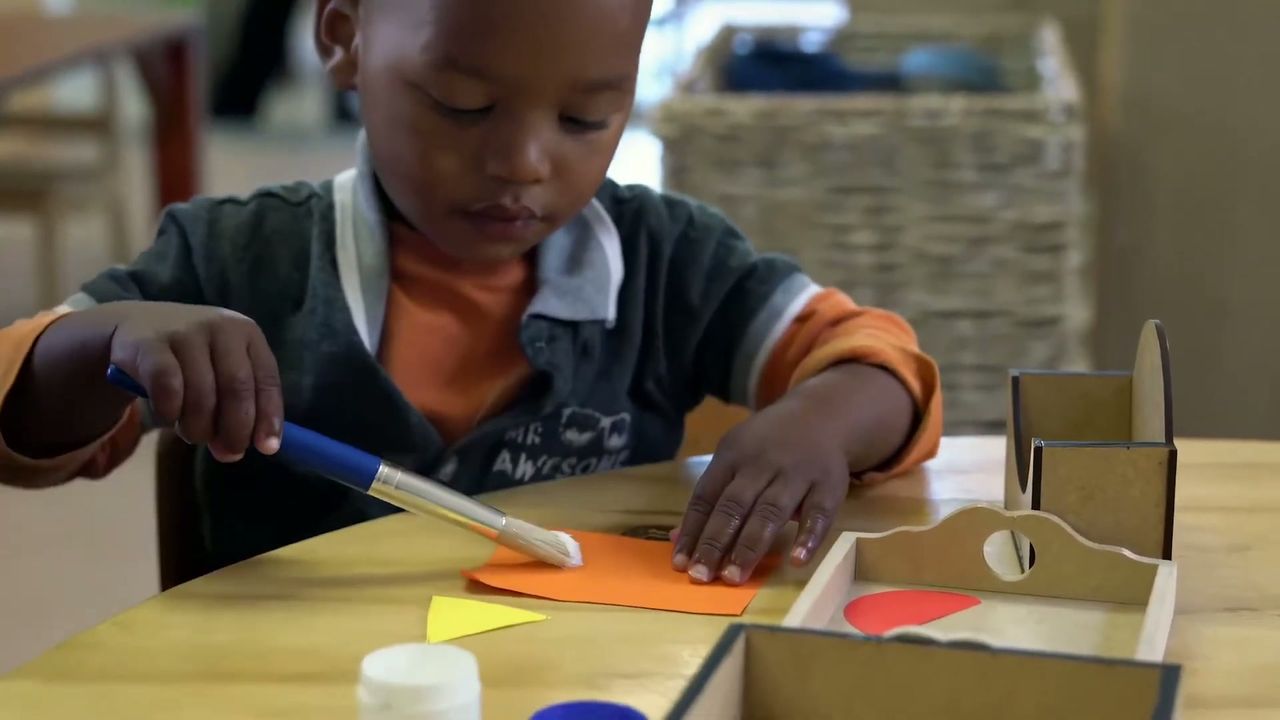
CoRE does not end when the training does. It changes the woman who takes it, the room she runs, the children in her care and the community around them. Over their careers, the 500+ teachers trained so far will each teach about 170 children. That is some 85,000 children who get an exceptional early education, where too many get an unacceptable one.
Women
Confidence, dignity, a profession
She trains without leaving her job, finds her voice, and can grow into a facilitator who trains others.
500+women teachers trained so far
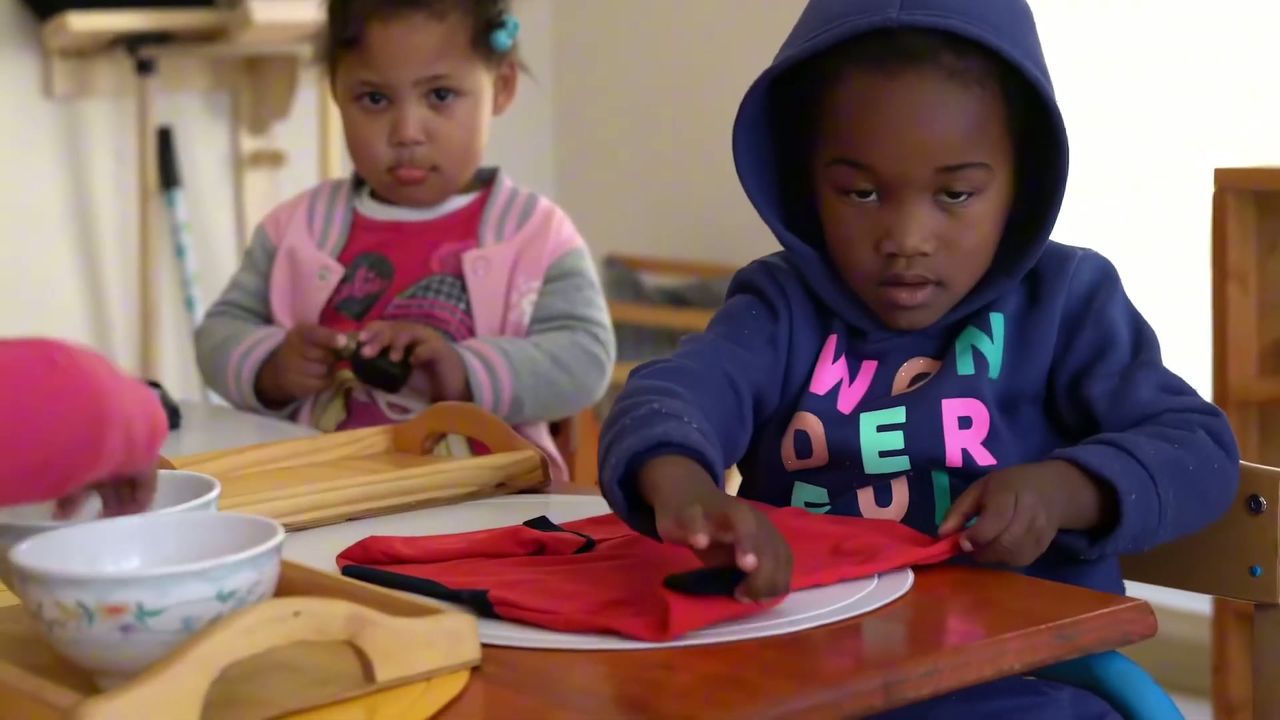
The classroom
A prepared environment
Ordered shelves and materials within reach, many made by hand.
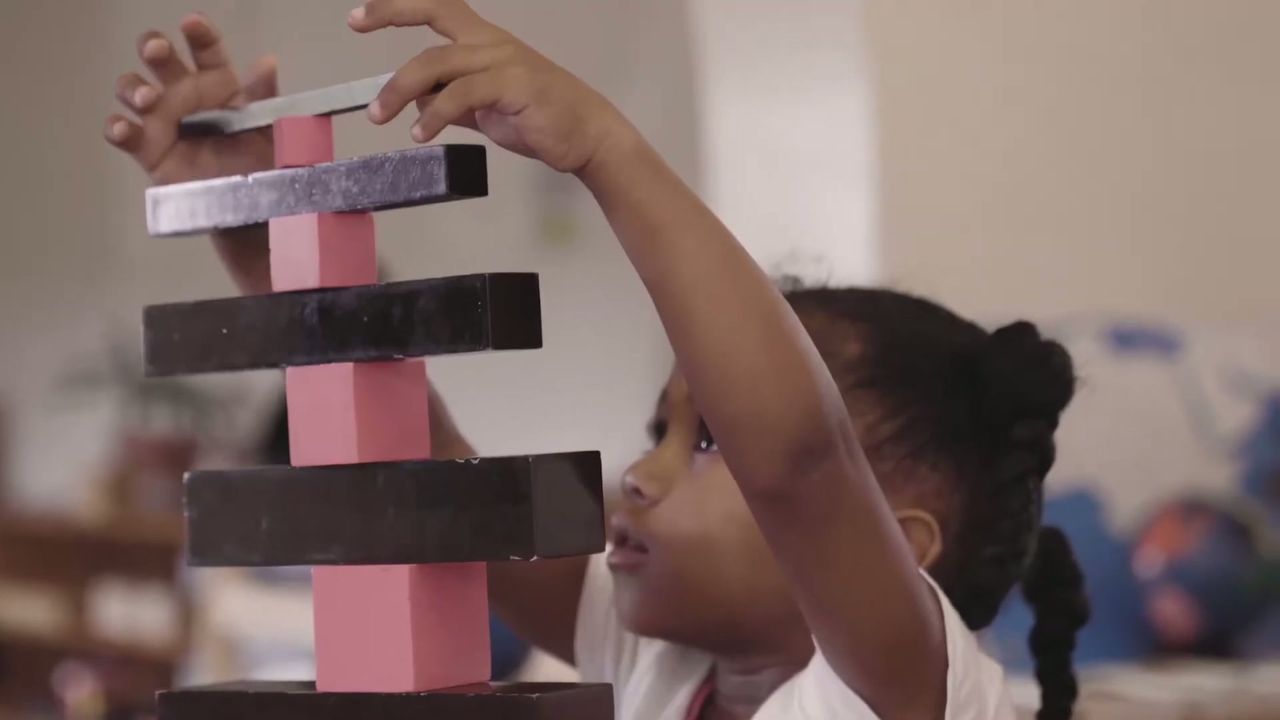
The child
Ready to learn
Concentration, independence and early literacy and numeracy.
81%of 48 assessed children on track overall, against 46% nationally (ELOM, June 2026)
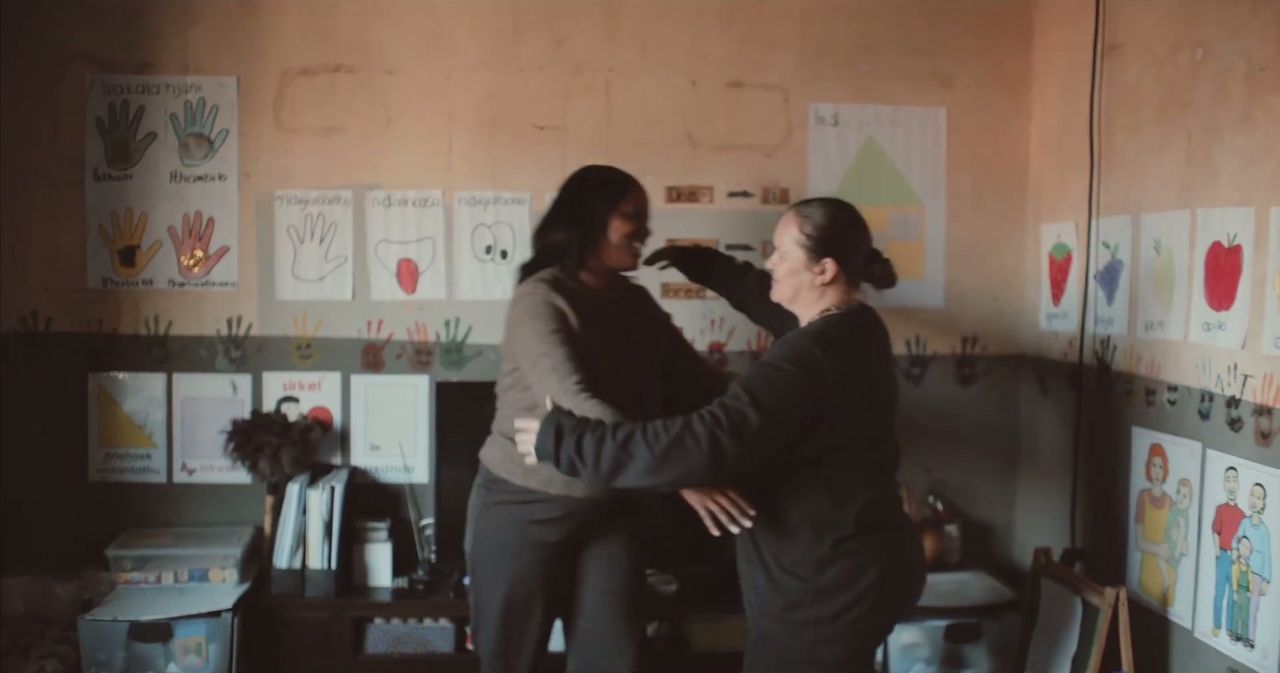
Mentoring
Support until practice holds
The programme is designed so that facilitators visit each centre during training and for at least five months after the last module.
5+months of mentoring after the last module
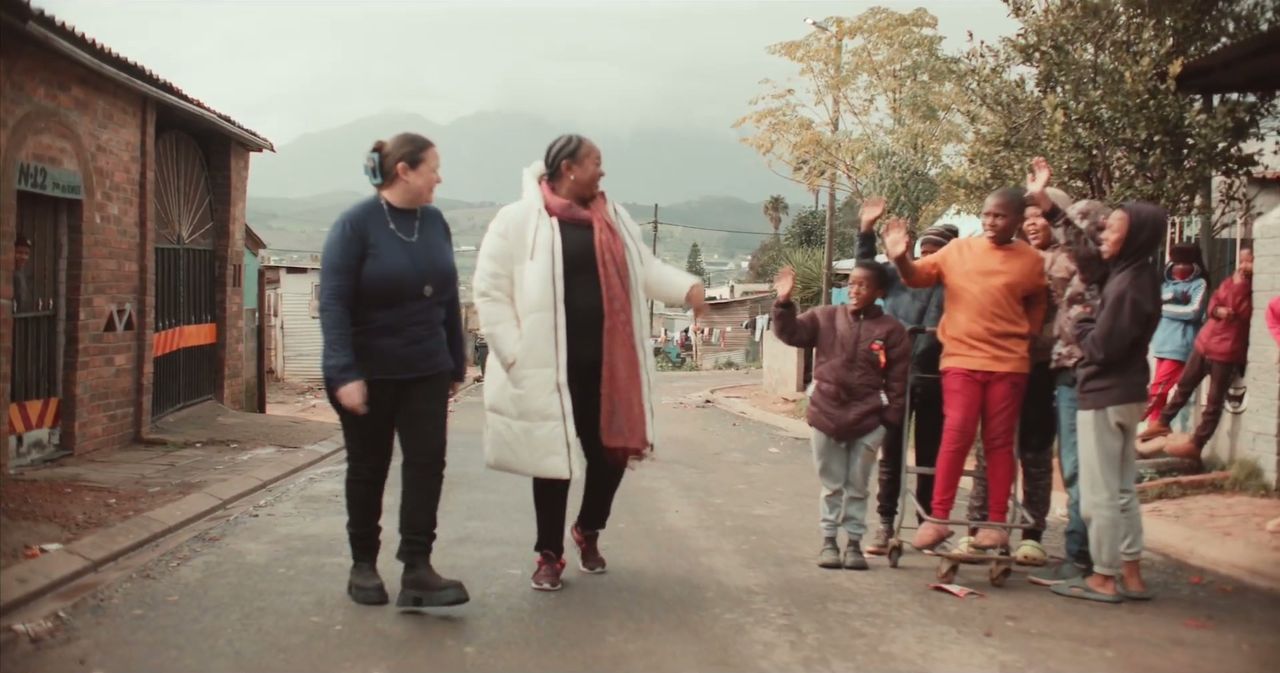
The community
Capability that stays
Graduates can enter a defined pathway to become the facilitators who train the next cohort, in their own language. Centres share a practice; families see what their children can do.
500+early childhood centres supported so far
Evidence
Measured independently
Children assessed independently with the Early Learning Outcomes Measure.
15CoRE-affiliated programmes assessed independently, June 2026


Teachers and centres: Indaba figures, October 2026. 85,000 is a model (500 teachers × about 170 children each), not a count. ELOM figures: children aged 50–59 months, June 2026, compared with Thrive by Five Index 2024 (see the proof below).
The proof
Where these children stand, measured independently.
Indaba did not want to rely on stories of change alone, so it asked an independent, accredited assessor to measure children's development.
The Early Learning Outcomes Measure (ELOM) is an independently administered South African assessment of early learning and development. In June 2026 an accredited assessor measured children in CoRE-affiliated early learning programmes in Kayamandi: a single snapshot, which shows where these children stood, not how far they travelled or what caused it.
Two views of the same assessment: all 48 children (81% on track overall, against 46% of children in early learning programmes nationally), and the chart below, the 50 to 59-month group compared with children of the same age nationally.
81%
of all 48 assessed children on track overall, against 46% of children in early learning programmes nationally
84%
of children aged 50–59 months on track overall, against 42% for the same age nationally
44%
in gross motor: level with the national figure. Where the result is weakest, and where CoRE is changing
ELOM 4&5 · share of children on track for their age, by domain
 44%44%35%37%
Gross motor
51%29%25%29%Fine motor
84%33%29%34%Numeracy and maths
58%40%37%45%Cognition and executive function
98%53%64%51%Literacy and language
84%42%39%43%Learning overall
All results as a table
| ELOM domain | CoRE | National | Western Cape | R351–R800 income group |
|---|---|---|---|---|
| Gross motor | 44% | 44% | 35% | 37% |
| Fine motor | 51% | 29% | 25% | 29% |
| Numeracy and maths | 84% | 33% | 29% | 34% |
| Cognition and executive function | 58% | 40% | 37% | 45% |
| Literacy and language | 98% | 53% | 64% | 51% |
| Learning overall | 84% | 42% | 39% | 43% |
The evidence also showed where more work is needed, particularly in gross motor development, where results matched the national picture. Indaba treats this as a signal to adapt CoRE, with more emphasis on movement, outdoor activity and practical-life work.
Evidence is not being used to prove perfection. It is being used to make the programme better.
The result is strong enough to ask the next question: does it hold when the same children are followed over time, and in more communities?
The power of one facilitator
One person. A multiplying legacy.
A facilitator trains and mentors teachers in cohorts of about 35. Each teacher shapes a classroom for years. Choose how many facilitators and over how long. Compare the planning model, where every teacher completes and stays, with a cautious one, where some do not.
- 1facilitator
- 70teachers trained in a year, in two cohorts of 35
- 2 100children in their classrooms in those teachers' first year
- 11 830children those 70 teachers could teach over their careers
The model as a table
| Facilitators | Years | Teachers trained, each counted once | Children they could teach over their careers | Teachers trained, each counted once, cautious | Children they could teach over their careers, cautious |
|---|---|---|---|---|---|
| 1 | 1 | 70 | 11 830 | ≈28 | ≈4 700 |
| 1 | 3 | 210 | 35 490 | ≈120 | ≈20 000 |
| 1 | 5 | 350 | 59 150 | ≈180 | ≈30 000 |
| 1 | 10 | 700 | 118 300 | ≈270 | ≈46 000 |
| 5 | 1 | 350 | 59 150 | ≈140 | ≈24 000 |
| 5 | 3 | 1 050 | 177 450 | ≈580 | ≈98 000 |
| 5 | 5 | 1 750 | 295 750 | ≈900 | ≈150 000 |
| 5 | 10 | 3 500 | 591 500 | ≈1 400 | ≈230 000 |
| 10 | 1 | 700 | 118 300 | ≈280 | ≈47 000 |
| 10 | 3 | 2 100 | 354 900 | ≈1 200 | ≈200 000 |
| 10 | 5 | 3 500 | 591 500 | ≈1 800 | ≈300 000 |
| 10 | 10 | 7 000 | 1 183 000 | ≈2 700 | ≈460 000 |
| 30 | 1 | 2 100 | 354 900 | ≈840 | ≈140 000 |
| 30 | 3 | 6 300 | 1 064 700 | ≈3 500 | ≈590 000 |
| 30 | 5 | 10 500 | 1 774 500 | ≈5 400 | ≈910 000 |
| 30 | 10 | 21 000 | 3 549 000 | ≈8 200 | ≈1 400 000 |
Model, not a result Five facilitators deliver CoRE today, and the 70-a-year ratio has not yet been observed in practice. Career figures count the children each teacher teaches, so a child taught by two teachers counts twice; they are never added to in-year figures.
The US$5M catalytic opportunity
Invest in capability that lasts.
Indaba's costed three-year national plan puts US$3.9M into training 1 470 teachers and US$1.1M into what lets the work continue after the grant: facilitators, standards, measurement, tools and local leadership. Switch between the two to see what funding delivery alone leaves behind.
- US$3.9MTraining 1 470 teachers
What remains Trained teachers who keep teaching long after the grant (planning estimate)
- US$300KFacilitator-in-Training pipeline
What remains Local facilitators who train the next cohorts
- US$150KStandards and operating system
What remains A shared definition of quality for every region
- US$140KMonitoring, evaluation and impact
What remains A measurement system that outlives the grant
- US$160KPractice tools for teachers
What remains Support in the classroom between mentoring visits
- US$180KFundraising enablement
What remains Local capacity to raise the next round of funding
- US$170KLocal leadership and co-leadership
What remains Leaders able to run the work and start the next node
- teachers trained over three years
- 1 470
- children they could teach over their careers
- ≈248 430
- per child taught, counting every dollar
- ≈US$20
About US$20 per child: the whole US$5M divided by the roughly 248 430 children 1 470 teachers could teach over their careers (169 each). A child taught by two teachers counts twice. Centre running costs, the Institute's campus and Ventures' products are outside this plan.
Proposal under discussion Indaba's costed plan, adapted from a proposal under discussion with a national partner; nothing is signed. The target range is our ambition, not a measured cost.
From one community to a region
A community is where it begins. A system is how it endures.
Indaba's next step is the regional node: one place where training, facilitators, local leaders, partners and quality assurance come together, so excellent practice can reach every centre in a region and keep going.
01
Establish
Agree a local leader and host partner, listen to what centres need, and train the first facilitators.
Ready for the next stage when
- A local leader and host partner in place
- Facilitators trained to deliver CoRE
- A baseline of the centres and children to be served
02
Prove
Train cohorts, mentor in classrooms, measure quality and children's development, and learn what delivery really costs.
Ready for the next stage when
- Completion and retention measured for every cohort
- Classroom quality observed at each centre visit
- Child assessment repeated, baseline to endline
- Cost per teacher known from the accounts
03
Sustain
Local leadership runs the node, funding comes from more than one source, and delivery holds without the founding team.
Ready for the next stage when
- Locally led, with succession in place
- More than one funder
- Facilitators trained within the node
- Quality holding two years running
04
Replicate
The node becomes able to help the next one start: hosting visits, mentoring leaders and lending master facilitators.
Ready for the next stage when
- A playbook tested by a second node
- Master facilitators able to support elsewhere
- Agreements and finance ready for a partner region
Model, not a result A draft model for discussion, not an operating structure. Kayamandi has worked through parts of Establish and Prove since 2021; no node has been declared, and the thresholds for each gate are still to be set.
The vision: excellence everywhere
Born in community. Built for the world.
Excellence everywhere is a long ambition, reached one honest step at a time. Solid frames exist today; dashed frames are proposals and futures. Choose a step to zoom out.
Where CoRE took root, near Stellenbosch. In 2025 a group of 35 teachers and principals from 31 centres began training, and in June 2026 an independent assessment measured children in 15 CoRE-affiliated programmes.
Indaba recordsCoRE has run in the Cape Winelands since 2021. The region around Kayamandi is where the first regional node would be proven: local leaders, facilitators and partners working as one system.
Proposal under discussionA national programme, released year by year against quality gates, building facilitators, standards and nodes across provinces.
Proposal under discussionGovernments and national organisations adopting the model in their own networks, to shared standards.
Future opportunityPartner organisations in other countries adapting CoRE to their own languages and communities.
Future opportunityA shared standard for what every child's beginning deserves, held by many institutions, not one.
Future opportunity
Future opportunity Nothing outside South Africa is operating today. We will publish targets for 2030 when they are costed.
Partners and communities
Who we work with.
Relationships of different kinds, each marked for what it is. Organisations are named once they have agreed to be.
Communities
Early childhood centres and the women who run them
More than 500 centres have taken part so far; 31 sent teachers and principals to the 2025 Kayamandi group.
Indaba records
Pedagogy
Educateurs sans Frontières
Designed CoRE. The social-justice arm of the Association Montessori Internationale.
Documented
Evidence
DataDrive2030
Its accredited assessors measured 48 children with ELOM in June 2026.
Independently assessed
The Indaba ecosystem
Indaba Institute and Indaba Ventures
Training and certification; the digital tools that support teachers.
Documented
A national implementation partner is in discussion on a costed three-year plan; nothing is signed. Past and present funders will be named as each agrees. No logos are shown until authorised.
Help make excellence accessible
Two ways to stand with every child.
Individuals join a movement. Institutions help build permanent capability. The promise is the same.
Become a Friend of Indaba
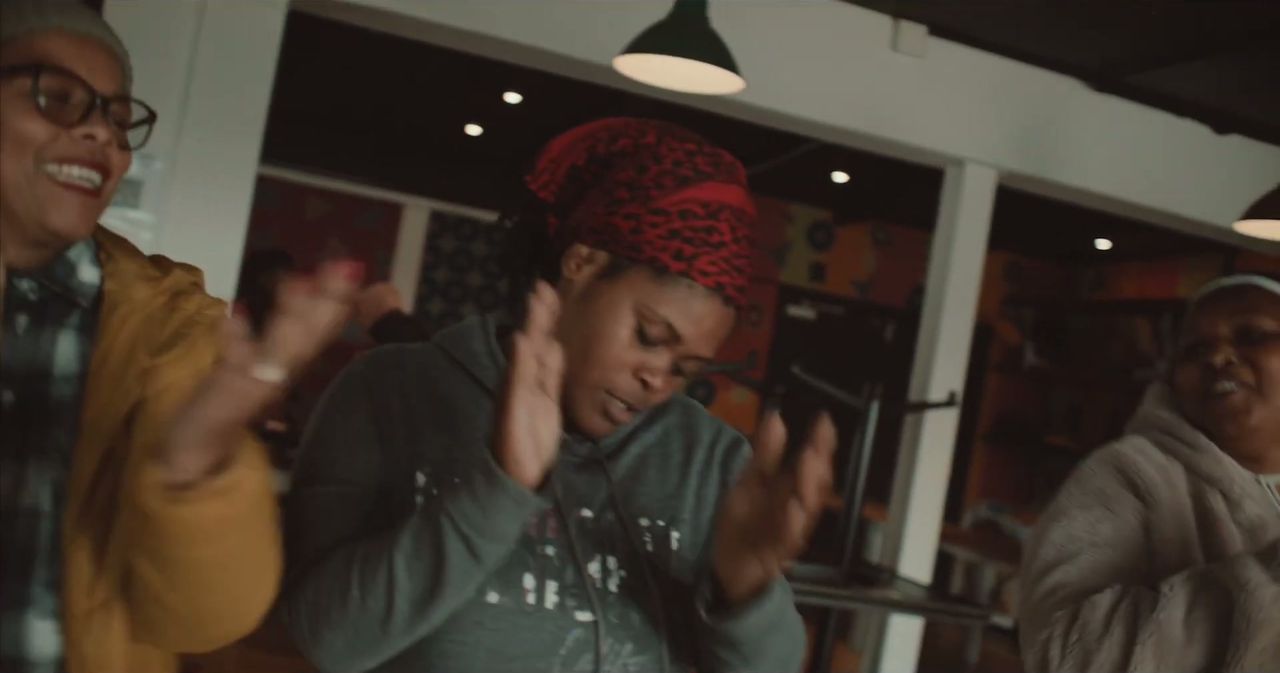
From US$30 a month, join a global community making exceptional early childhood development accessible to every child.
Become a Friend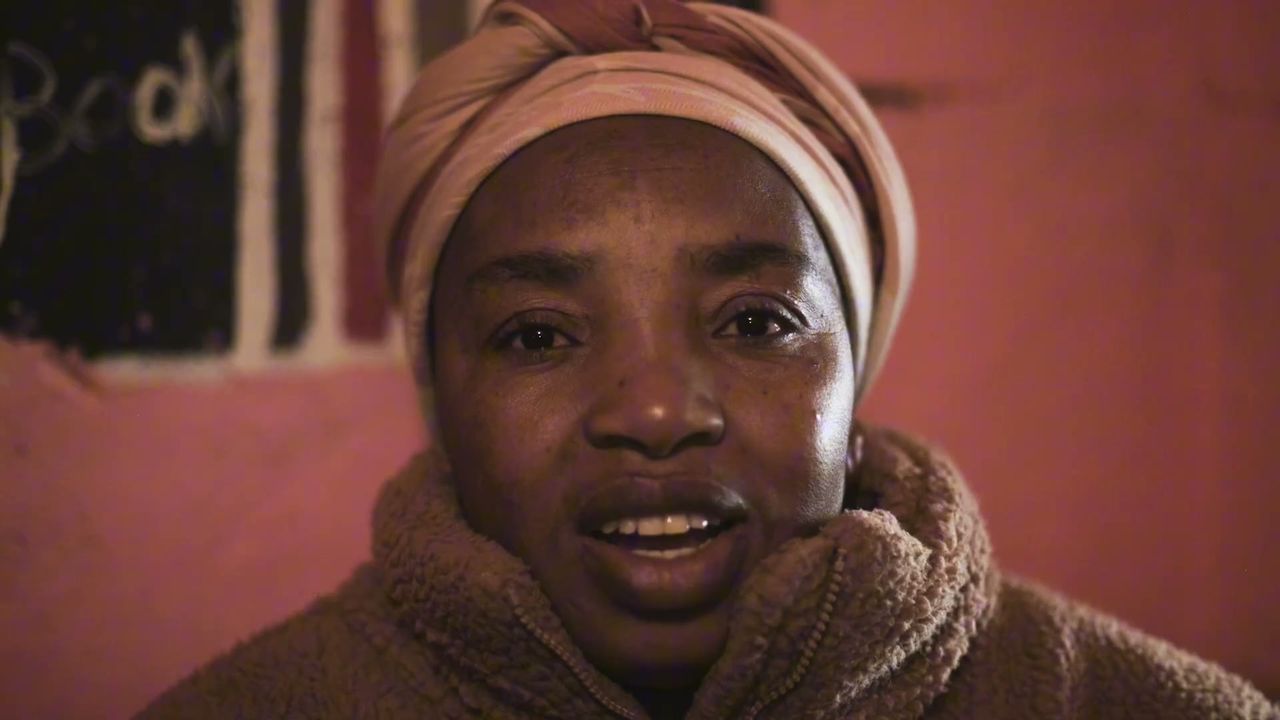
Become an Impact Partner
Typically US$30,000 to US$300,000 a year: educator cohorts, facilitators, a community or a region, designed with you.
Design a partnership


