THE JOURNEY

02
THE PROOF

Learning from communities, educators and families already demonstrating what is possible.
Indaba discovered how to make excellence accessible.‍
2.1 IN ACTION

The work has already begun.

Indaba was not born in a boardroom. It emerged through years of practical work alongside children, educators, caregivers and communities.

Before building systems, we needed to understand reality.

What does transformation actually look like?
What changes lives?
What scales?
What fails?

Over the past decade, Indaba and its partners have worked alongside schools, educators, communities, researchers and families across Southern Africa.

The lessons learned from this work now shape everything we are building.
2.2 A PROVING GROUND FOR CHANGE

A Proving Ground for Change

Why South Africa became one of our most important learning environments.

For more than a decade, Indaba has worked alongside educators, caregivers and communities in South Africa.
A country of extraordinary potential.
A country of profound inequality.
A place where the challenges are visible, measurable and urgent, but where the opportunity to create lasting change is equally remarkable.
If quality early childhood development can become accessible here, it can become accessible almost anywhere.
Learning Crisis
81% of Grade 4 learners in South Africa cannot read for meaning (PIRLS)

The foundations of learning are often lost long before children reach adolescence.
Before School Begins
Only around 1 in 9 children
start school with the foundations they need
Extreme Inequality
A few kilometres separate some of Africa’s most privileged neighbourhoods from communities where opportunity remains scarce.

The contrast is striking. The potential is universal.
The Investment Gap
Less than 1% of South Africa’s national budget is allocated to early childhood development.

The years that matter most remain among the least invested in.
Dense forest with tall pine trees under warm sunlight, with rolling grassy hills in the background.
2.3 KAYAMANDI - SOUTH AFRICA

One of the world’s most unequal places.

If quality early childhood development can transform outcomes here, it can transform outcomes almost anywhere.

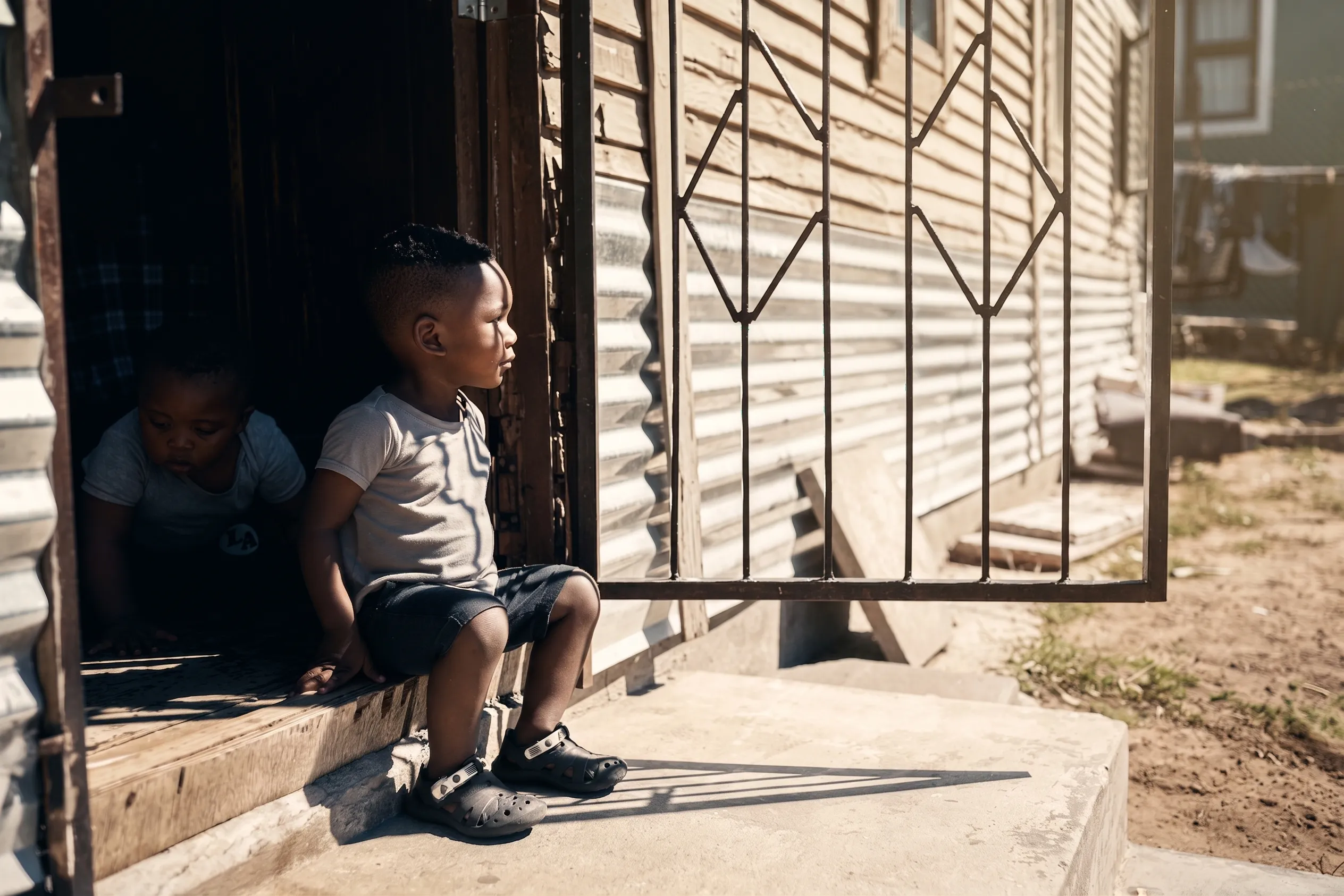
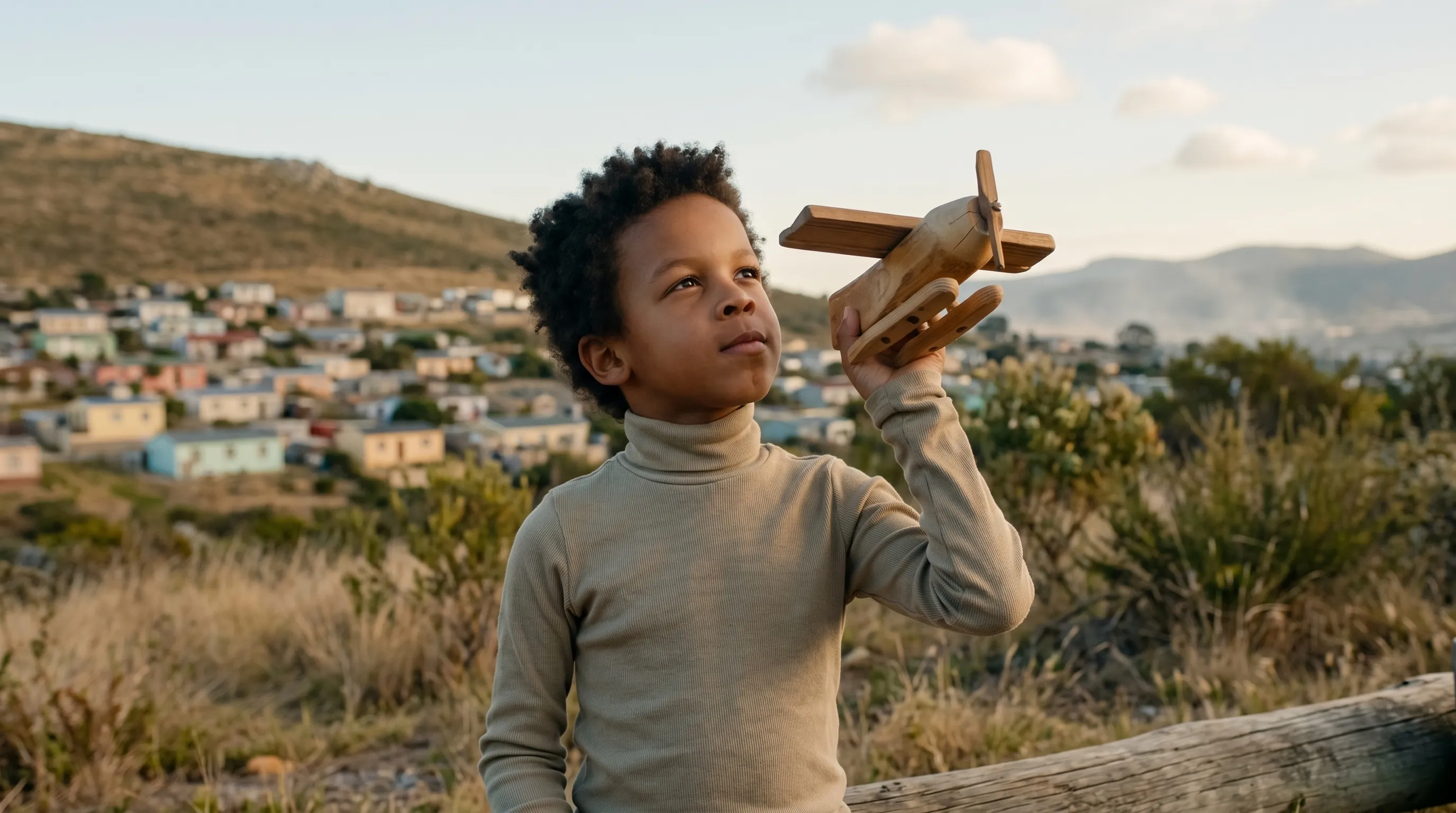
A short distance from the vineyards, universities and technology hubs of Stellenbosch lies Kayamandi, a community shaped by the legacy of apartheid and the realities of modern inequality.

South Africa remains one of the most unequal countries in the world.

In places like Kayamandi, many children begin life facing significant barriers long before they enter school. Yet alongside these challenges lies extraordinary potential.

Strong families.
Committed educators.
Resilient communities.
Determined local leaders.

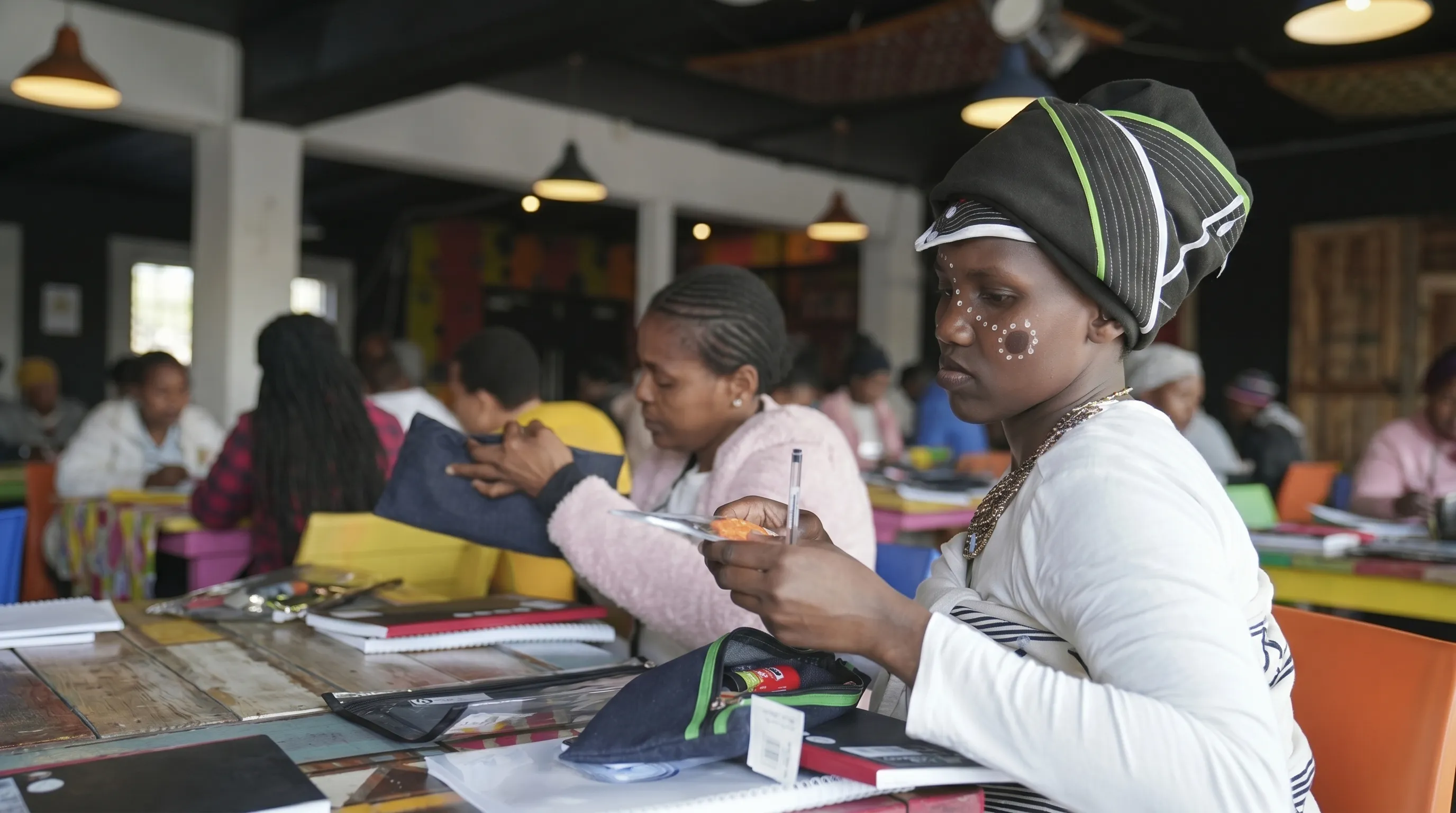
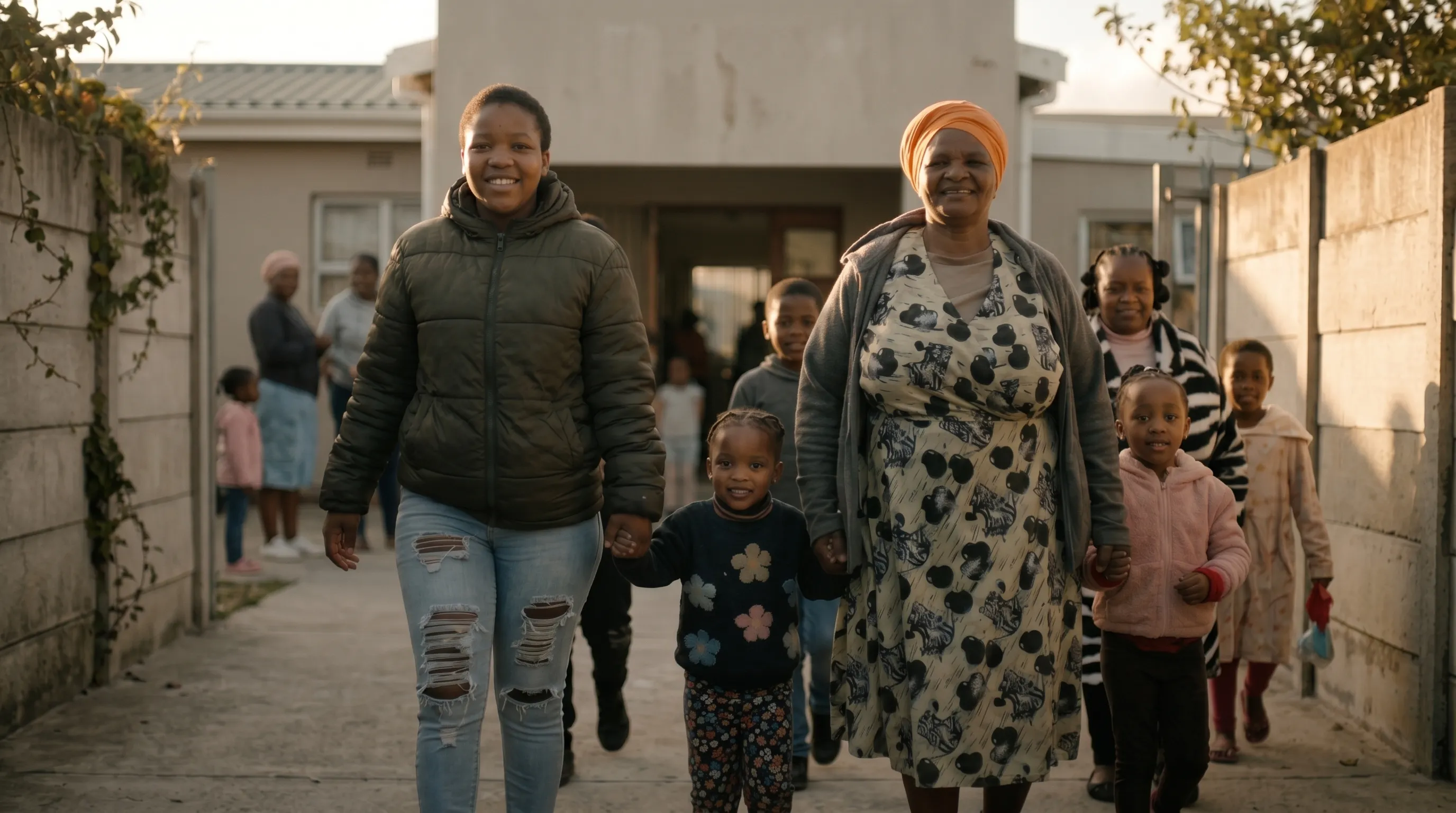
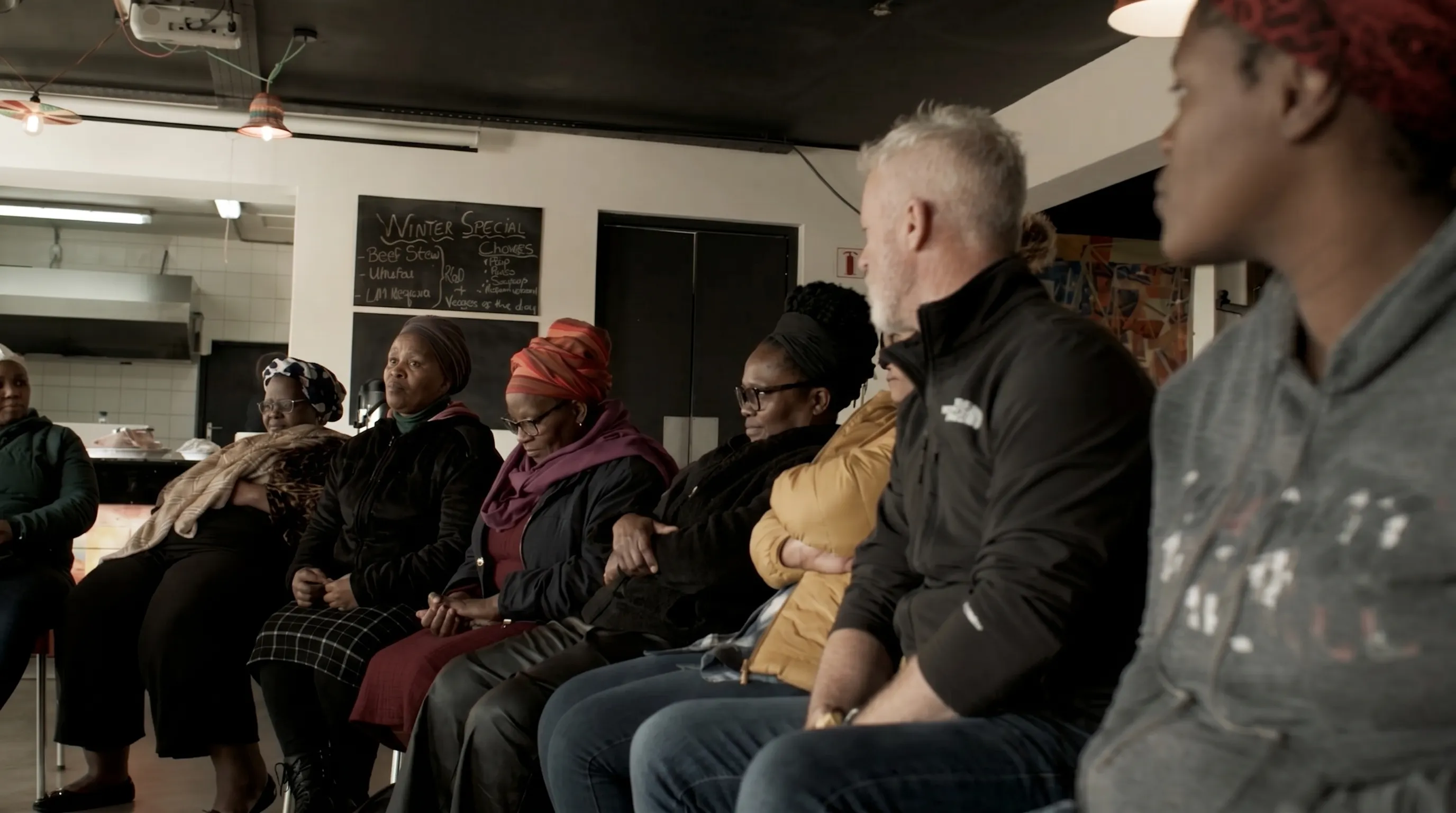
For more than a decade, Indaba and its partners have worked alongside educators, schools and families in this community.

Not to build a showcase project. But to understand a deeper question:

Can excellence become accessible? Kayamandi became a proving ground for ideas, methods and systems that could later be adapted far beyond South Africa.

The goal was never to transform one community.

The goal was to discover what could help transform thousands.
2.3 KAYAMANDI

Communities change when adults change.

The most powerful intervention is often not directed at children, but at the adults who shape their lives.

Children rarely transform in isolation.

Their outcomes are deeply influenced by the people around them.
Parents.
Caregivers.
Teachers.
School leaders.

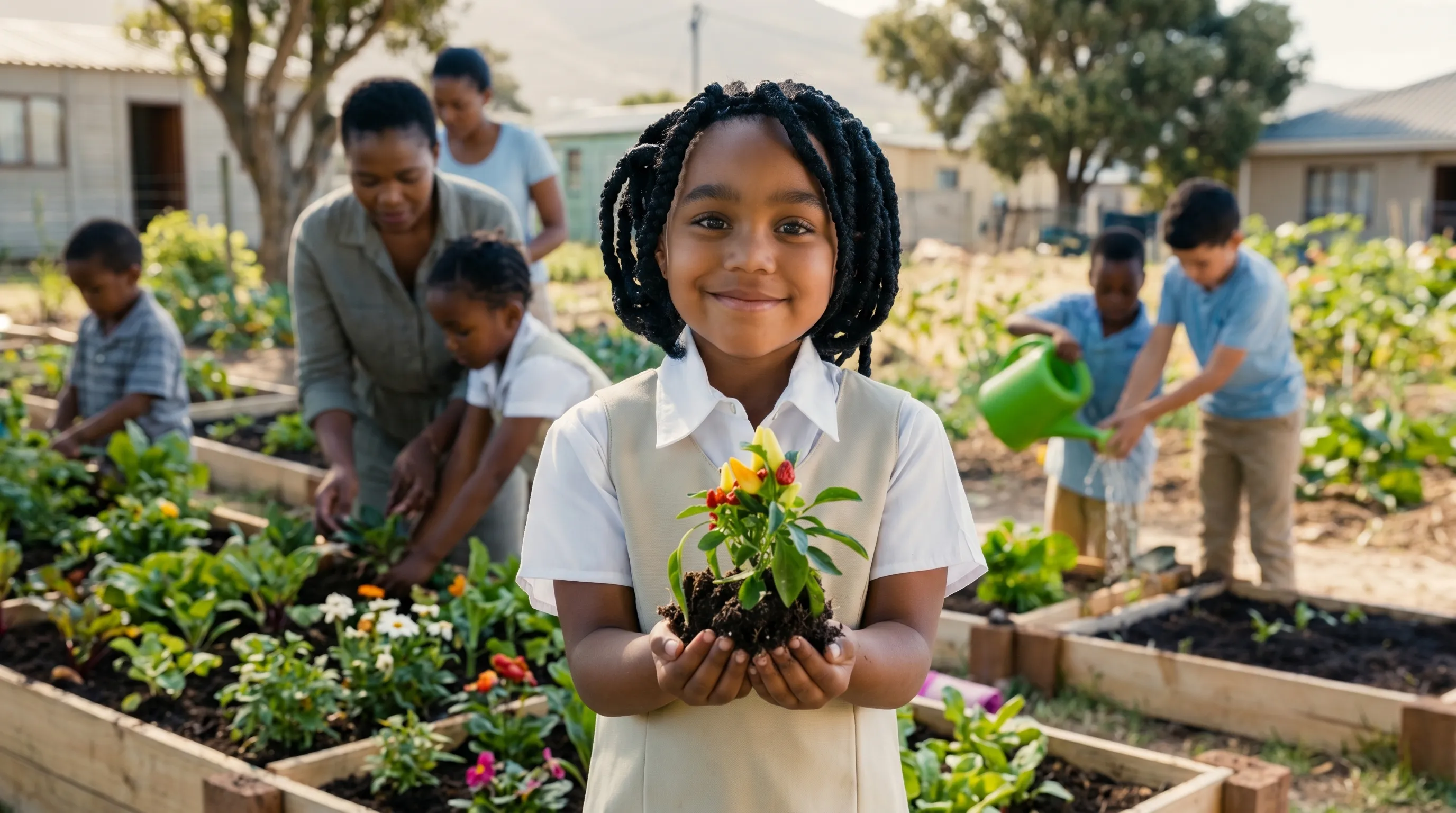
When adults gain new knowledge, skills and confidence, the impact extends far beyond the classroom.

The transformation of one adult often becomes the transformation of hundreds of children.

This insight would become one of the foundations of the Indaba system.
2.4 The breakthrough

CoRE: Making Excellence Accessible

A Montessori-informed model that transforms educators, learning environments and communities.

Indaba did not begin by building an institution. It began by asking a simple question:

How can the world’s most effective approaches to early childhood development become accessible to every child, regardless of where they are born?

The answer became CoRE : Community Rooted Education.

A Montessori-informed approach adapted for real-world communities and designed to operate at scale without sacrificing quality.

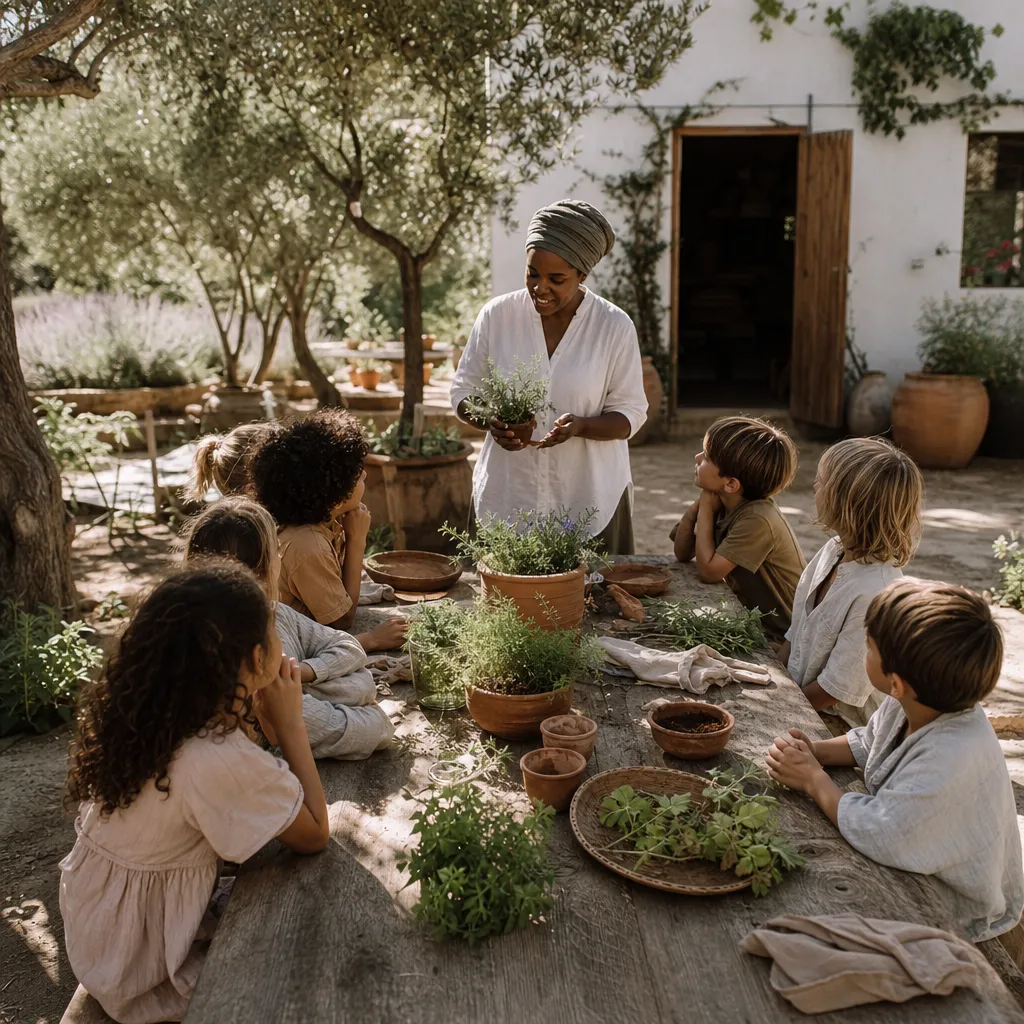
Rather than importing expensive models, CoRE develops excellence from within communities themselves.

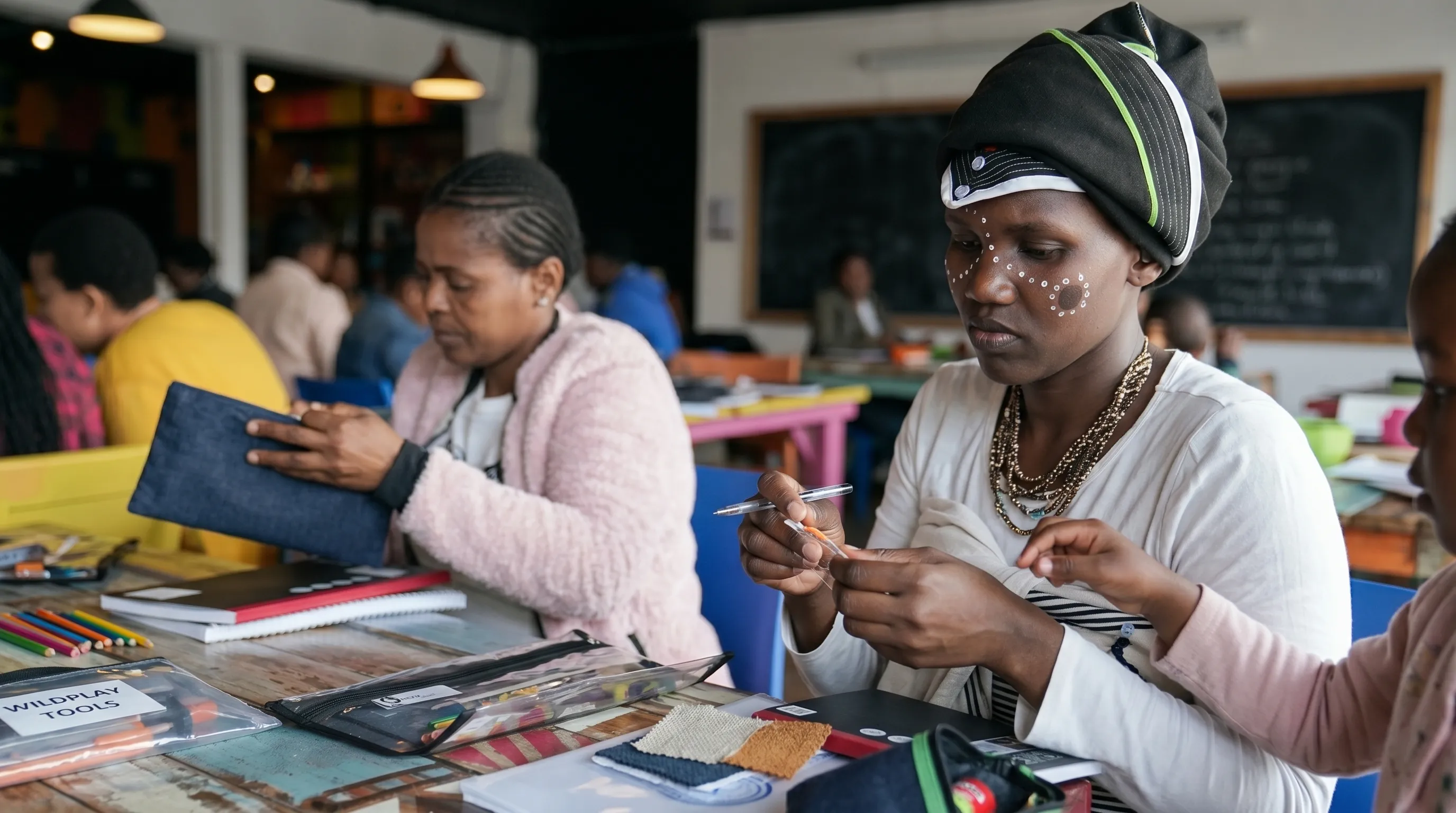
It equips educators with practical skills, deep understanding of child development and the confidence to become agents of transformation.

The classroom becomes more than a place of instruction.

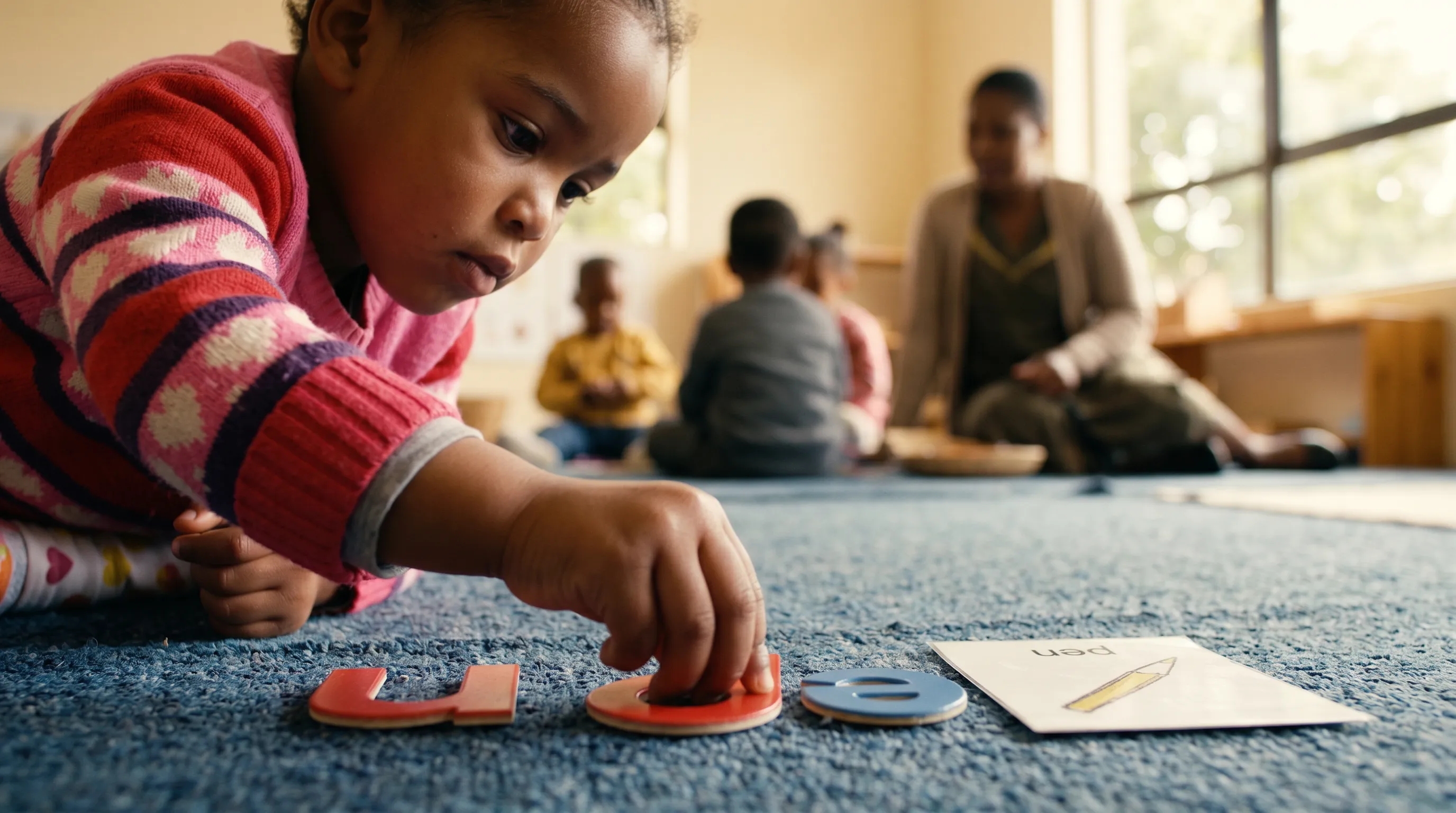
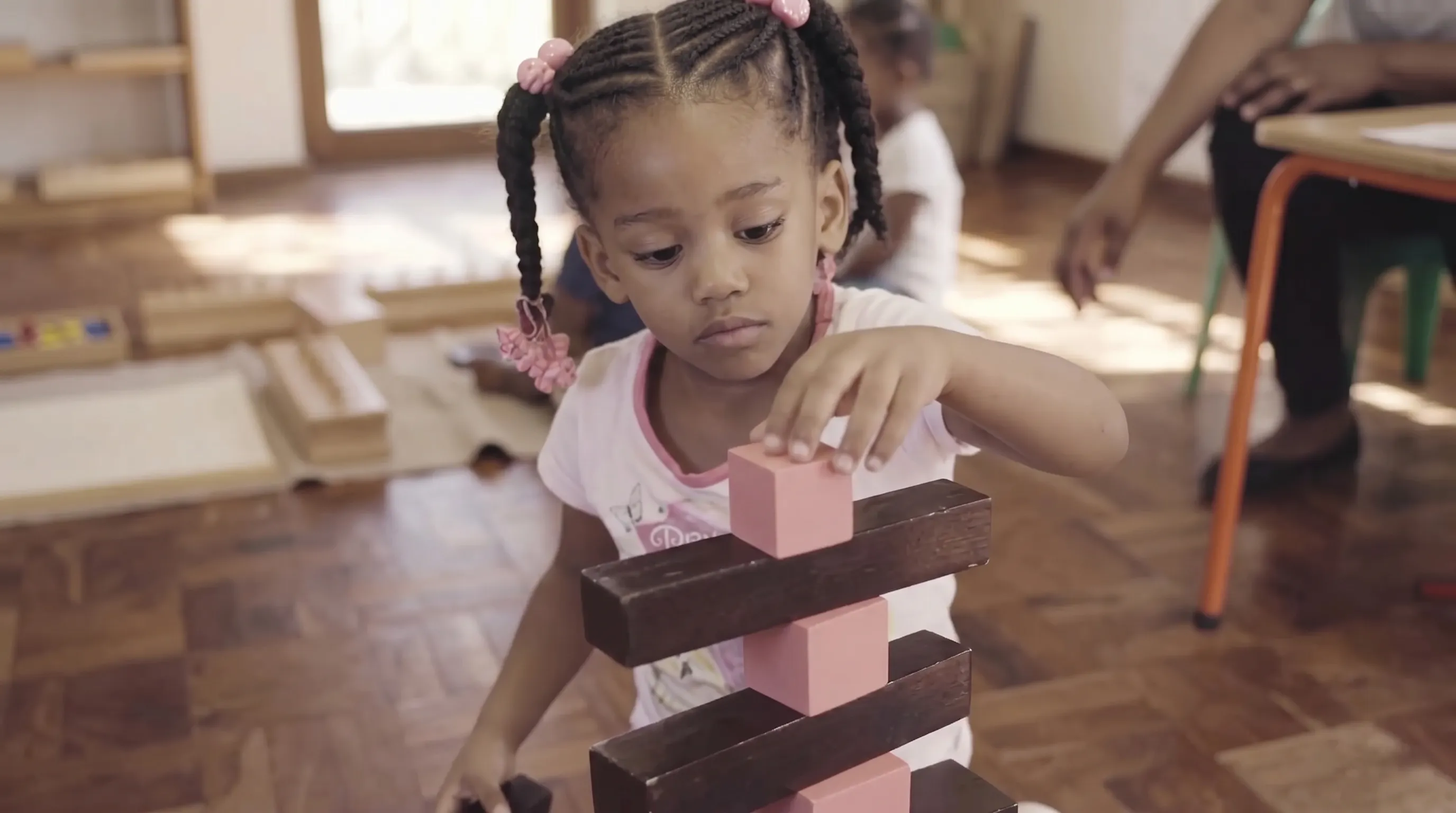
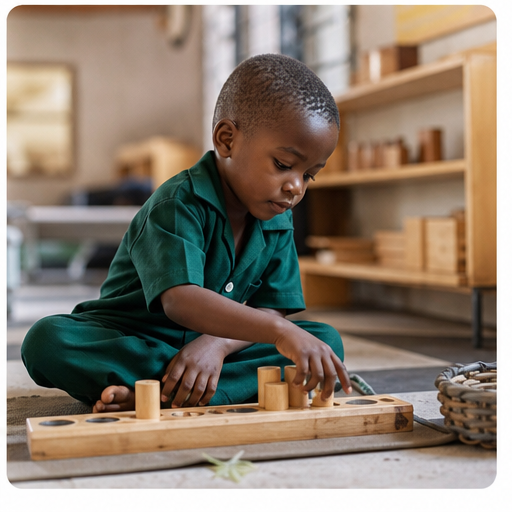
It becomes an environment where children can develop independence, concentration, confidence, language, movement and a lifelong love of learning.
Indaba Powered by  Association Montessori International
2.4 THE BREAKTHROUGH

What makes CoRE Different

a Montessori-rooted training approach developed at the world-leading Indaba Institute,

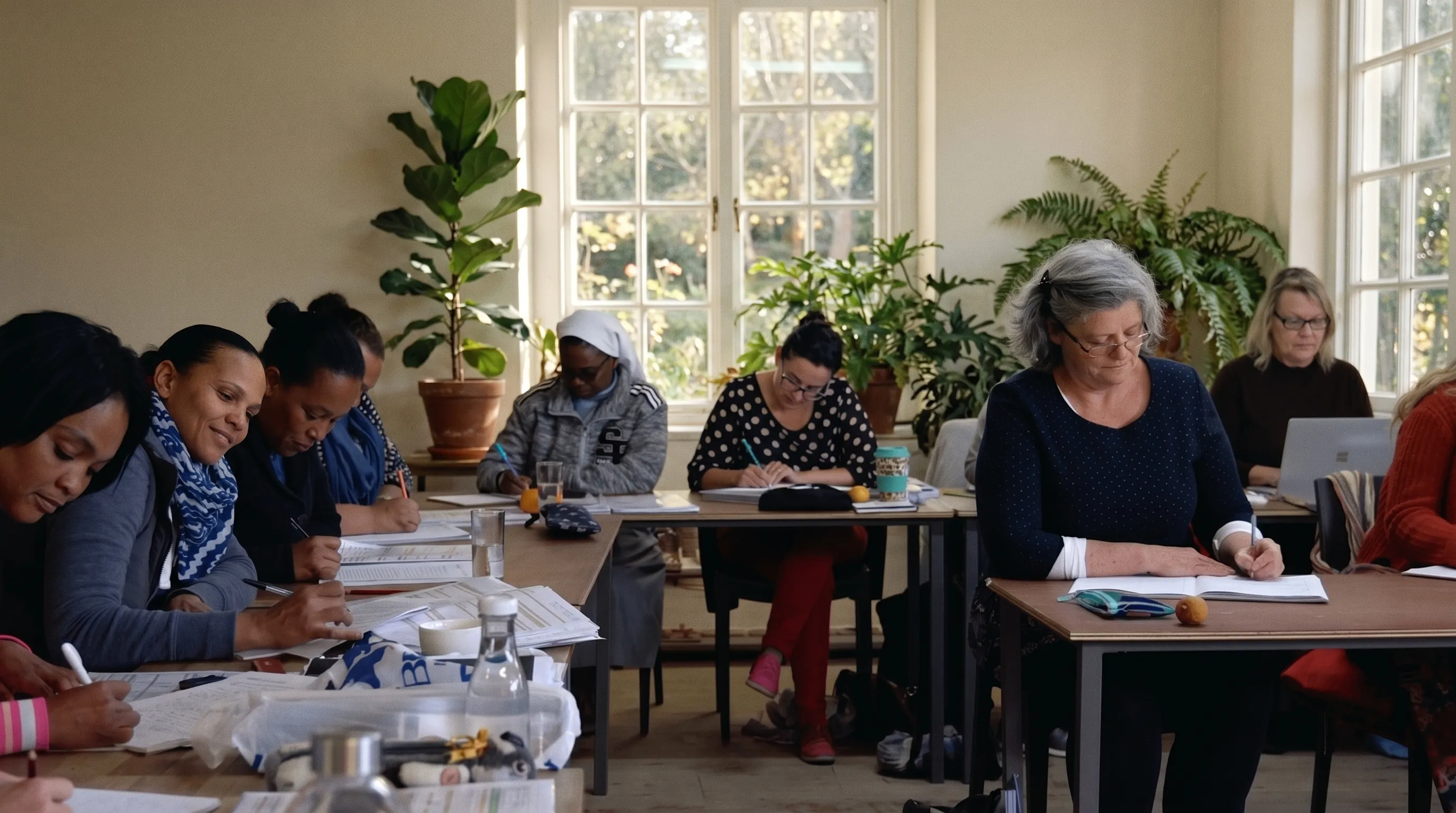
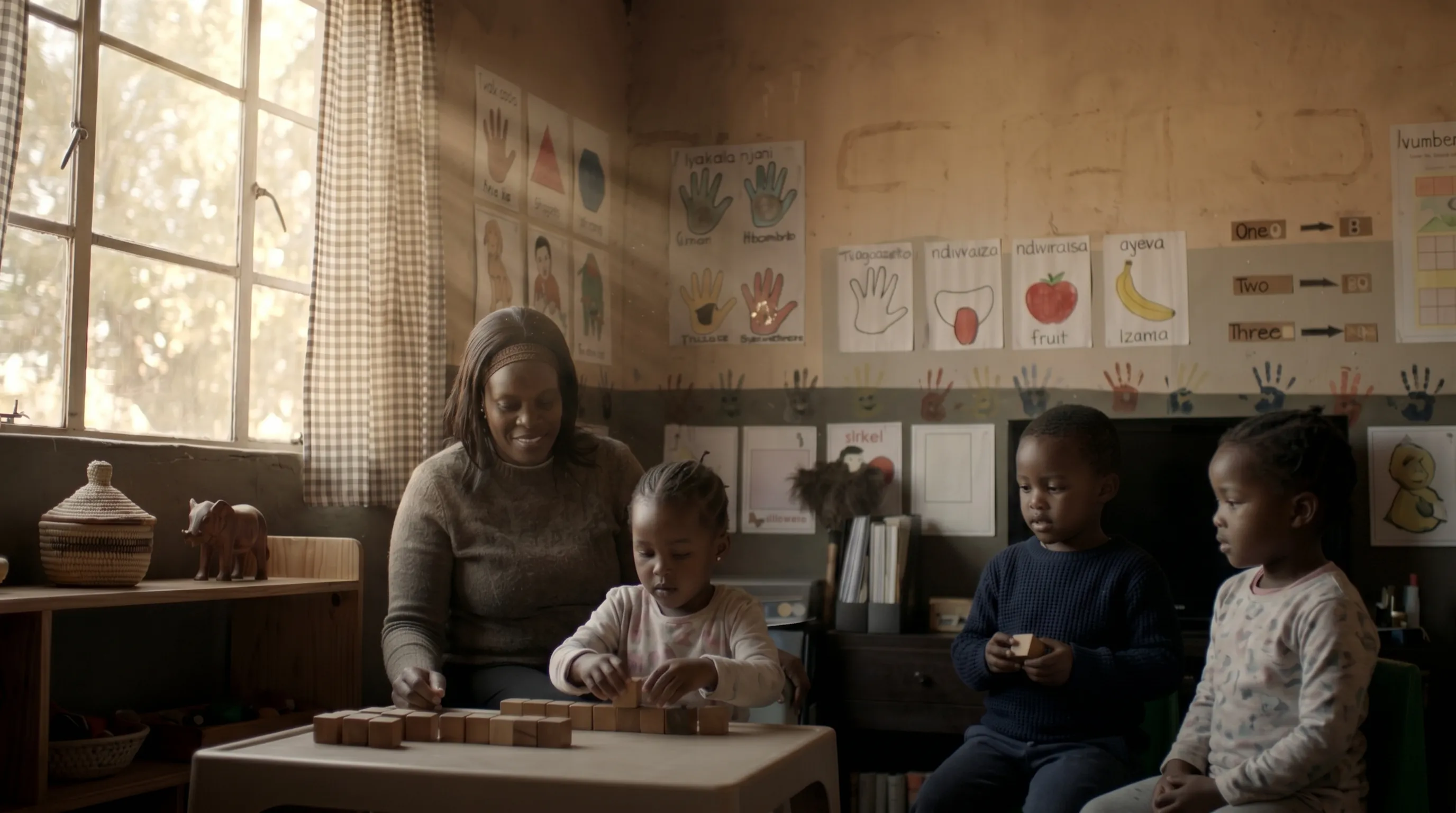
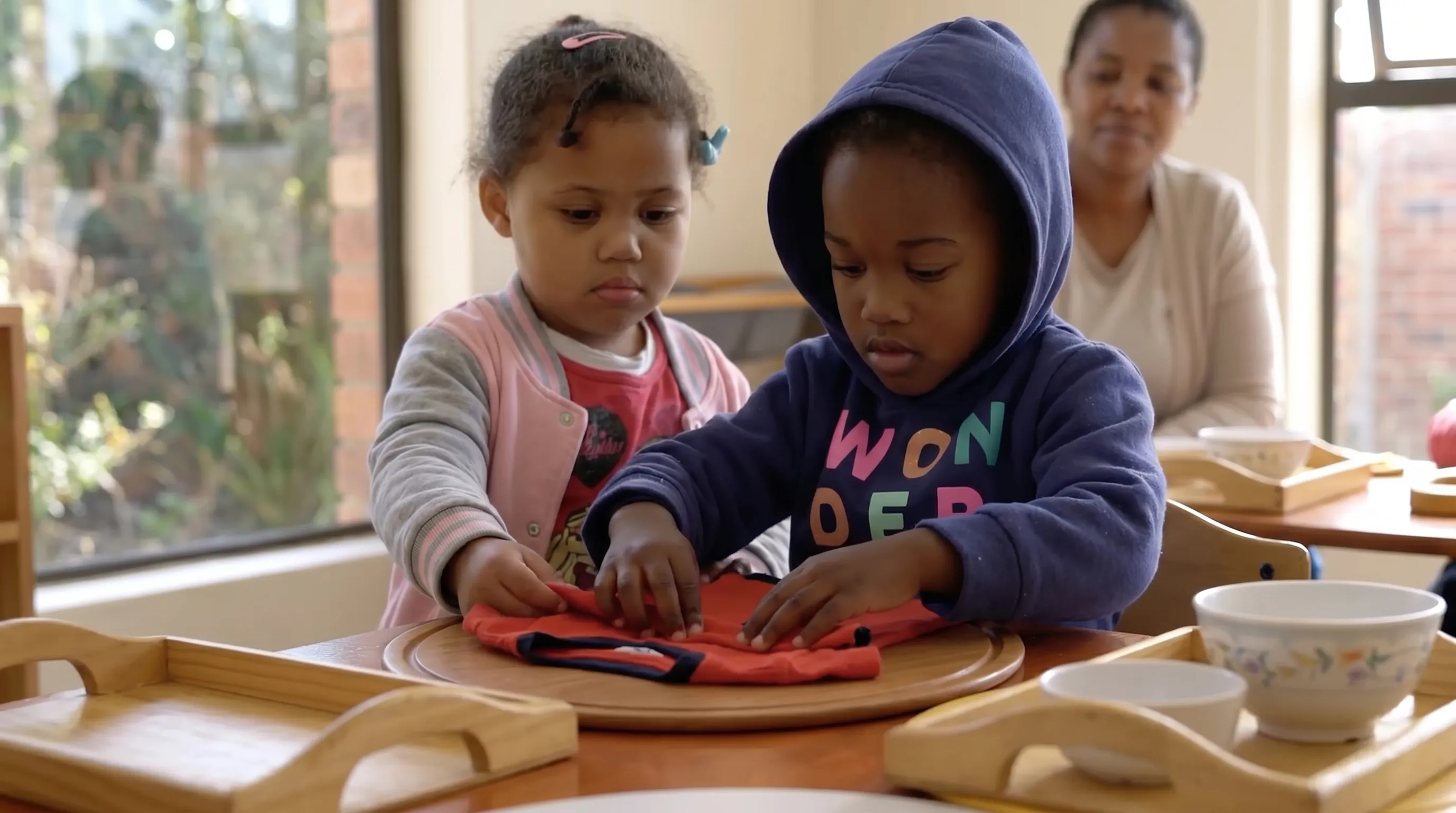
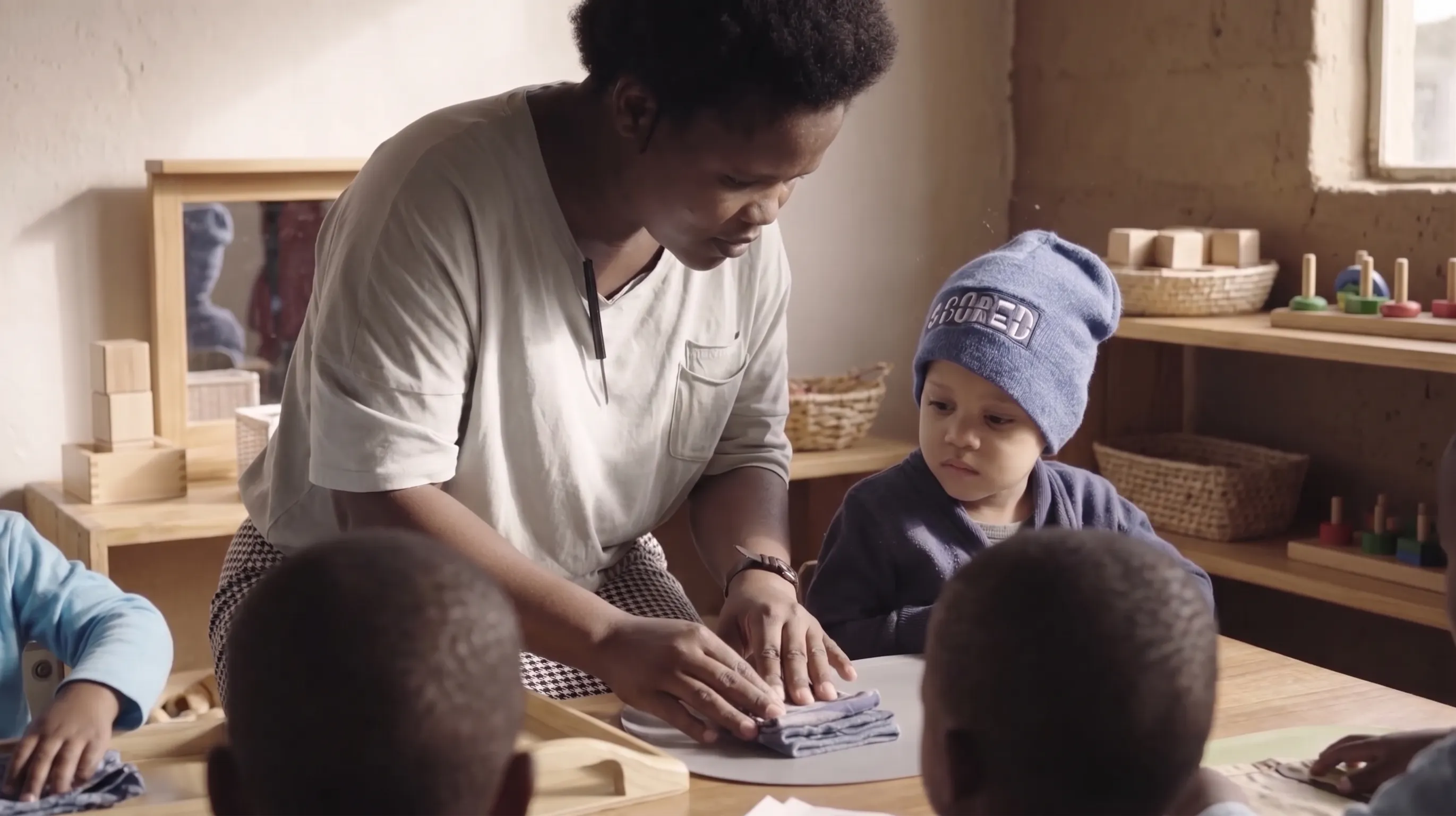
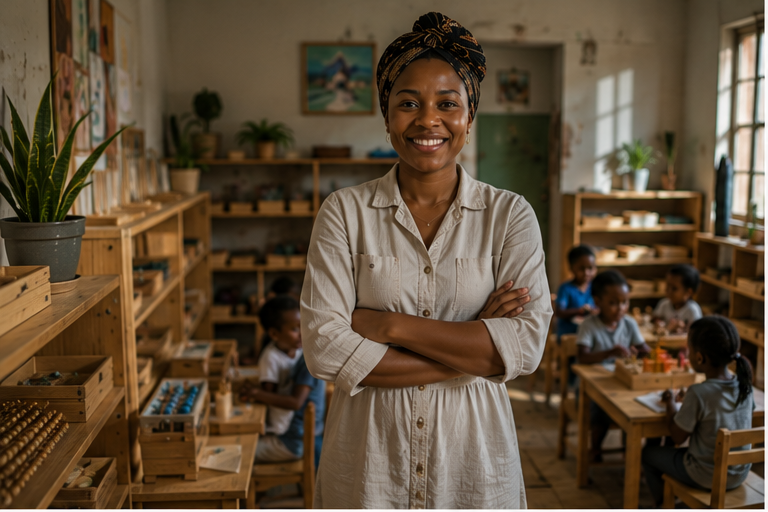
Through our Community Rooted Education (CoRE), We trained local women as early childhood teachers, equipping them not only as educators, but as trusted role models within their communities.
‍
 
→ Classrooms once marked by chaos became calm, ordered, and focused.
→ Children showed measurable gains in development.
→ In communities plagued by violence and poverty Independent ELOM assessments recorded some of the strongest results in the country, delivered at a cost communities and systems can sustain.
‍
This is the ground Indaba stands on.
Community Rooted
Training happens within communities, not apart from them.
+ 10.000 CHILDREN TRANSFORMED
Montessori Informed
Grounded in proven principles of child development, observation and prepared environments.
Dense forest with tall pine trees under warm sunlight, with rolling grassy hills in the background.
Practice Based
Learning is embedded in real classrooms, not disconnected workshops.
Mentored
Ongoing coaching and reflection support long-term growth.
Dense forest with tall pine trees under warm sunlight, with rolling grassy hills in the background.
Measured
Progress is monitored through observation, reflection and developmental assessment tools including ELOM.
Dense forest with tall pine trees under warm sunlight, with rolling grassy hills in the background.
2.5 TRANSFORMATION

When adults change, children change.

Indaba measures success by the number of lives transformed.

Indaba is not only an early childhood programme.
It is a human development system.

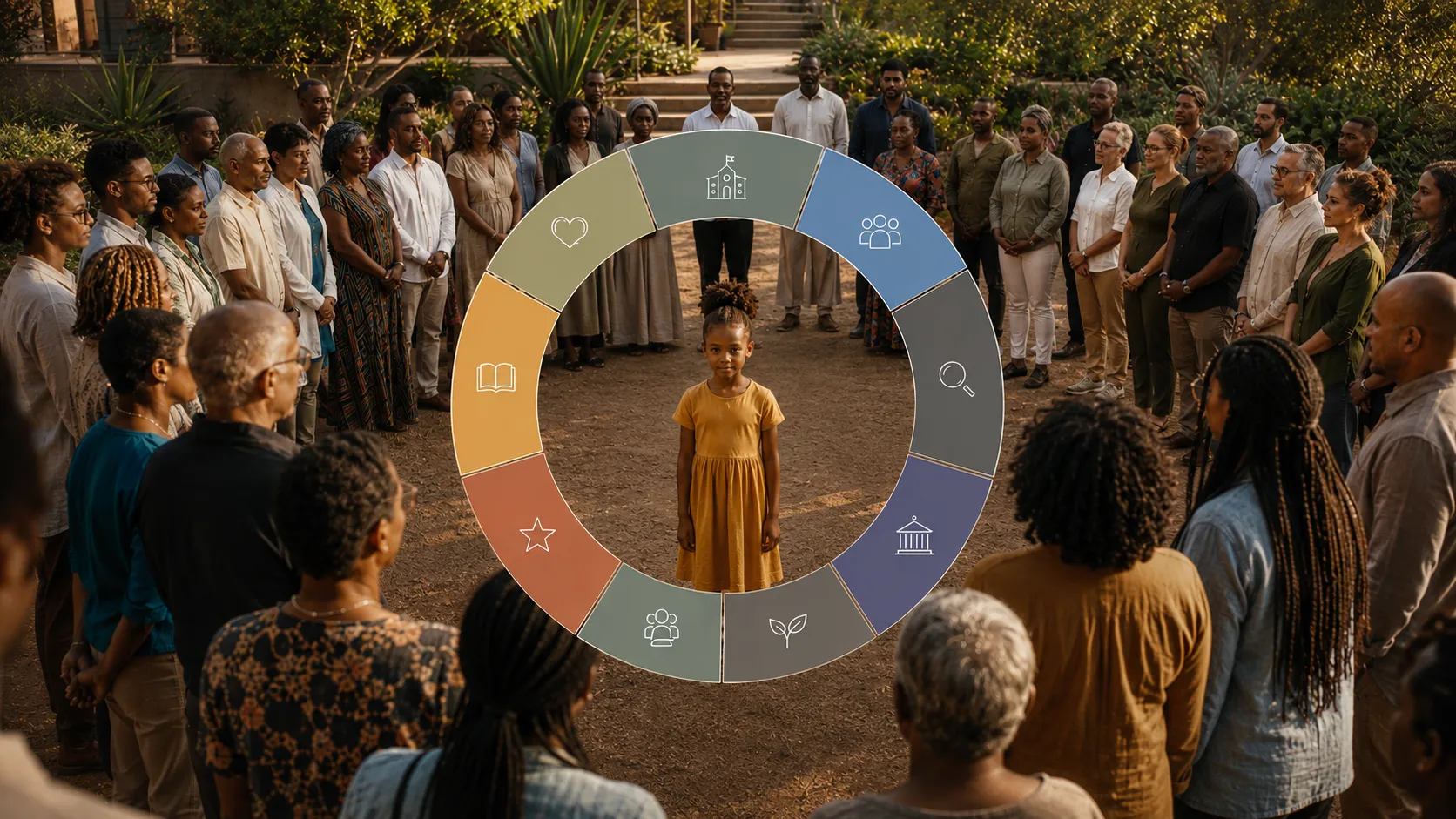
We begin with the adults closest to the child : the mother, the caregiver, the teacher, the guide, because children rarely transform in isolation.

A child’s world changes when the adult beside them changes.
When an adult becomes calmer, the room becomes calmer.
When an adult learns to observe, the child begins to be seen.
When an adult prepares the environment, the child begins to act with independence.
When an adult understands development, discipline becomes guidance.
When an adult discovers dignity in her work, children experience dignity in their care.

This is the transformation Indaba exists to make possible.

Not only better test scores.

Better lives.
01. The Child
From unseen to supported.

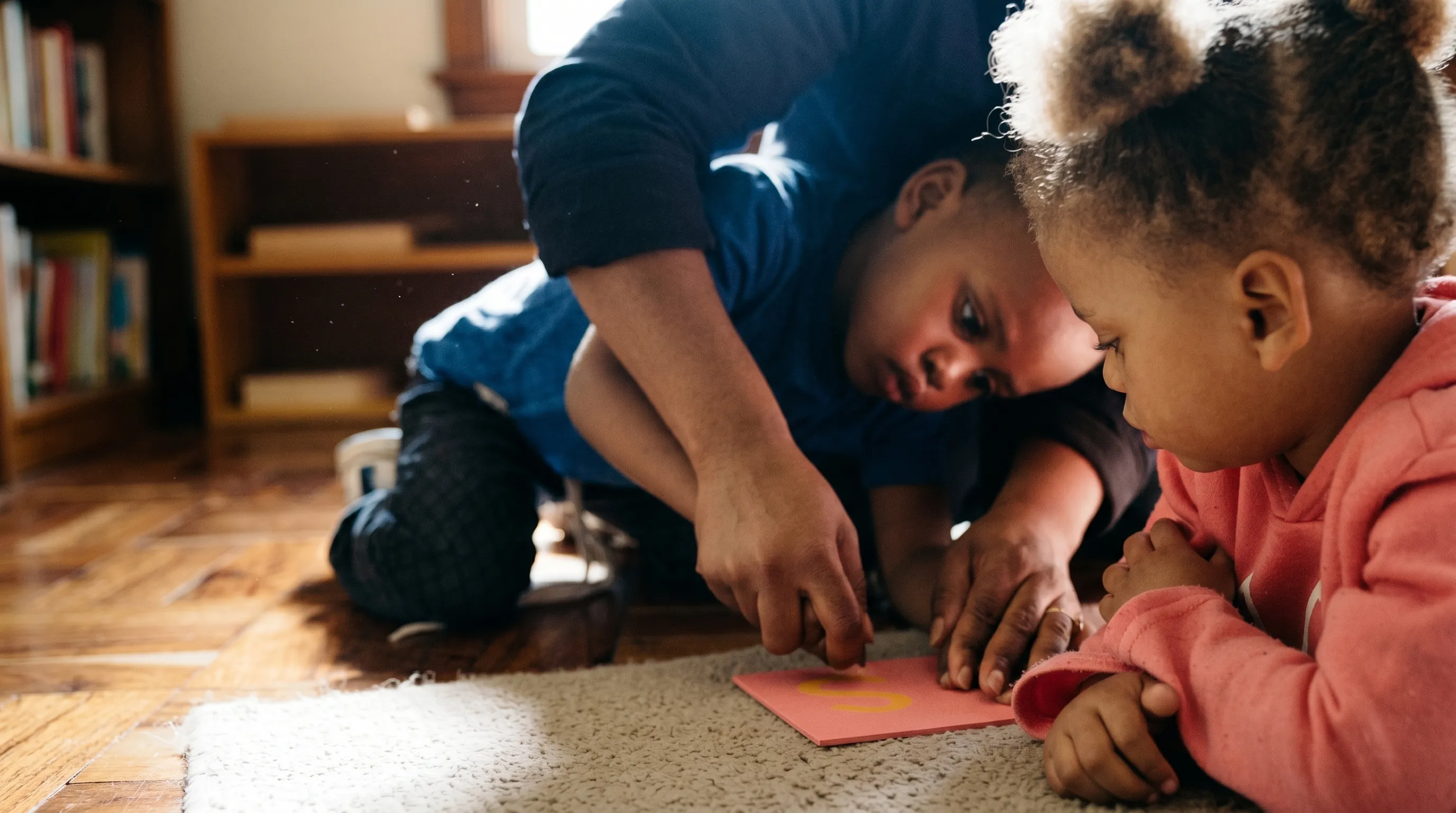
A child who once moved through noise, stress and disorder begins to experience rhythm, safety, language, beauty and attention.

The child becomes more concentrated.

More confident.
More independent.
More able to regulate emotion, communicate needs, explore, play, move and learn.

This is not only school readiness.

It is life readiness
02. The Teacher / Guide
From informal caregiver to prepared adult.

The adult begins to see herself differently.
Not as someone merely keeping children safe.

But as a guide.A professional.A role model.
A community shaper.

She learns to observe before intervening.

To prepare rather than control.
To guide rather than command.
To create order without domination.
To hold a space where children can flourish.

Her confidence grows.
Her vocation becomes visible.
Her work gains dignity.
03. The Environment
From chaos to order.

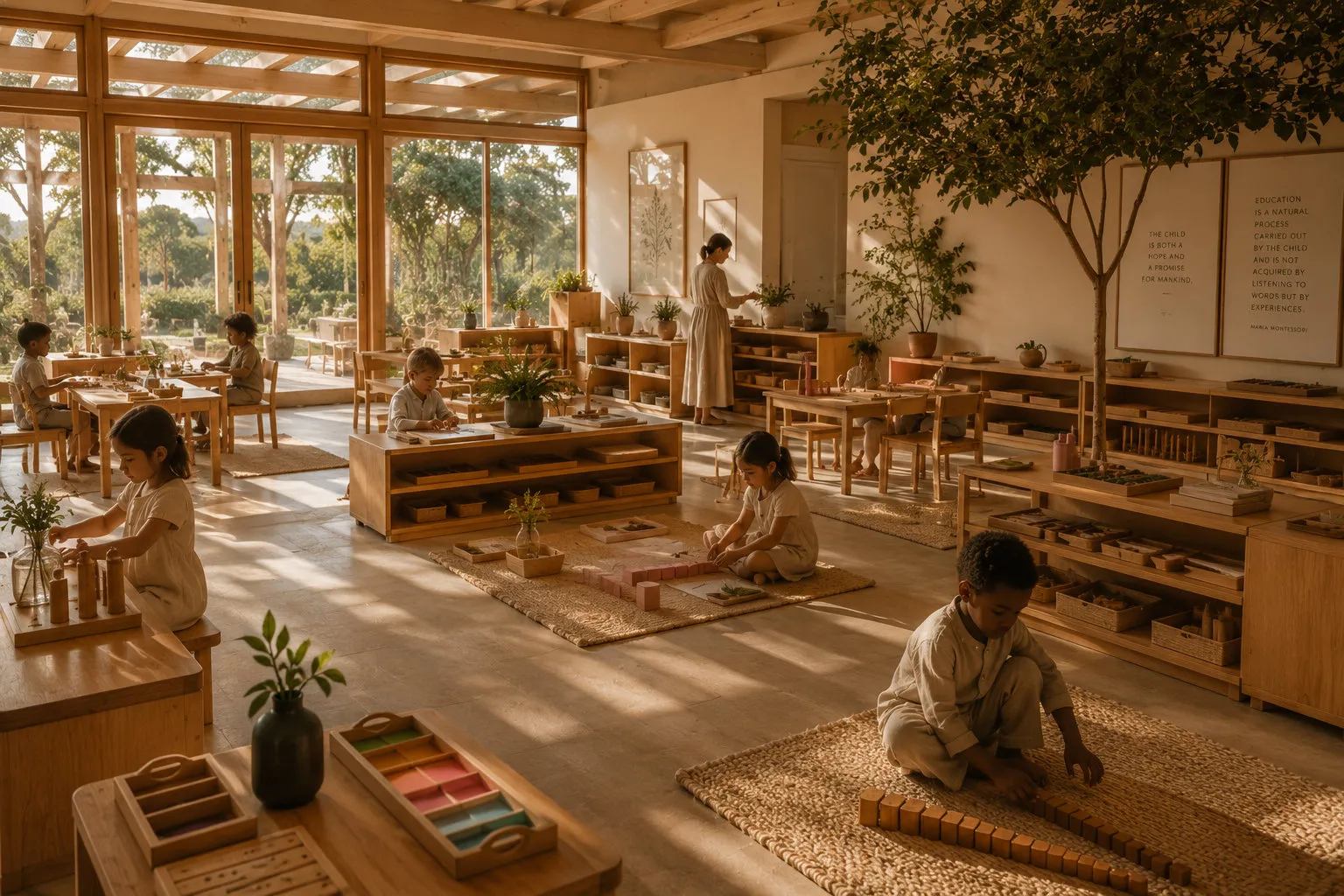
A classroom does not need to be wealthy to become beautiful.

With training, intention and care, ordinary spaces can become prepared environments.

Shelves are ordered.
Materials are accessible.
Children choose purposeful work.
Movement becomes calmer.
Language becomes richer.
The atmosphere changes.
The room begins to communicate:

You are safe here.
You are capable.
You belong.
04. The Community
From fragile centres to anchors of hope.

When a teacher changes, a classroom changes.
When classrooms change, centres become stronger.
When centres become stronger, families trust more deeply.

Parents gain confidence.
Children attend more consistently.
Local women gain status, skill and opportunity.

The ECD centre becomes more than a place of care.

It becomes a community anchor.
Indaba’s deepest impact is not only what can be measured on a dashboard.

It is the transformation of human beings.

A child seen.
A woman dignified.
A classroom ordered.
A family strengthened.
A community renewed.

That is the ground Indaba stands on.
2.6 EVIDENCE

Transformation you can see. Evidence you can measure.

Stories inspire action. Evidence builds confidence.

Transformation should not depend on belief alone.

If we hope to improve lives at scale, we must be able to observe, measure and understand what changes.

This is why Indaba works alongside researchers, assessment frameworks and independent evaluators.

The goal is not simply to demonstrate impact. It is to learn continuously, improve quality and ensure that what works can be replicated elsewhere.
Independent ELOM Results
In communities facing poverty, inequality and significant educational barriers, independent ELOM assessments recorded some of the strongest improvements in the country.

- Children demonstrated substantial gains across multiple dimensions of development, including:
- Language and Literacy
- Cognition and Executive
- Function
- Numeracy
- Gross Motor Development
- School Readiness
Beyond School Readiness
Not everything that matters can be measured.

But many of the things that matter most can be observed.

Children become more confident.
More independent.
More concentrated.
More curious.
More capable of working with others.

Teachers become more prepared.
Classrooms become more ordered.
Parents become more engaged.
Communities become more hopeful.
What We Measure
Developmental Outcomes

Classroom Quality

Educator Growth

Centre Performance

Family Engagement

Long-Term Child Flourishing
One Last Thing
The evidence confirms what educators witness every day:

When adults are prepared, environments improve.

When environments improve, children flourish.

When children flourish, futures change.
METRICS SECTIONS

Proven before scaling.

In underserved communities in South Africa, we trained educators, supported caregivers, and rebuilt early learning environments from the ground up.
‍
Independent evaluations show some of the strongest early learning outcomes in the country — at a cost the world can afford.
Discover our impact →
10+ YEARS
On-the-ground early childhood implementation
1000+
Of adults trained in under-resourced contexts
~$30
Per child Measurable child development outcomes
+3 Billion
of online lessons already delivered globally
2.7 FROM KAYAMANDI TO TANZANIA

A model that travels.

What works in one community must be able to work in another.

Many educational initiatives succeed in a single location.

Few can be adapted across cultures, languages and contexts while maintaining quality.

From the beginning, Indaba’s ambition was never to transform one school, one community or one country.

The goal was to discover what can be replicated.

The work that began in communities such as Kayamandi gradually expanded into new regions, new schools and new countries.

Each context brought different languages, cultures, economic realities and educational challenges.

Yet the foundations remained remarkably consistent.

Prepared adults.
Prepared environments.
Strong relationships.
High expectations.
Continuous mentoring.
A commitment to quality.

These principles proved adaptable across contexts while remaining faithful to the needs of local communities.
2.8 PARTNERS

No organisation can do this alone.

The future of childhood will not be built by one institution. It will be built by a coalition.

The challenge is simply too large.

No school can solve it.
No government can solve it.
No foundation can solve it.
No NGO can solve it.

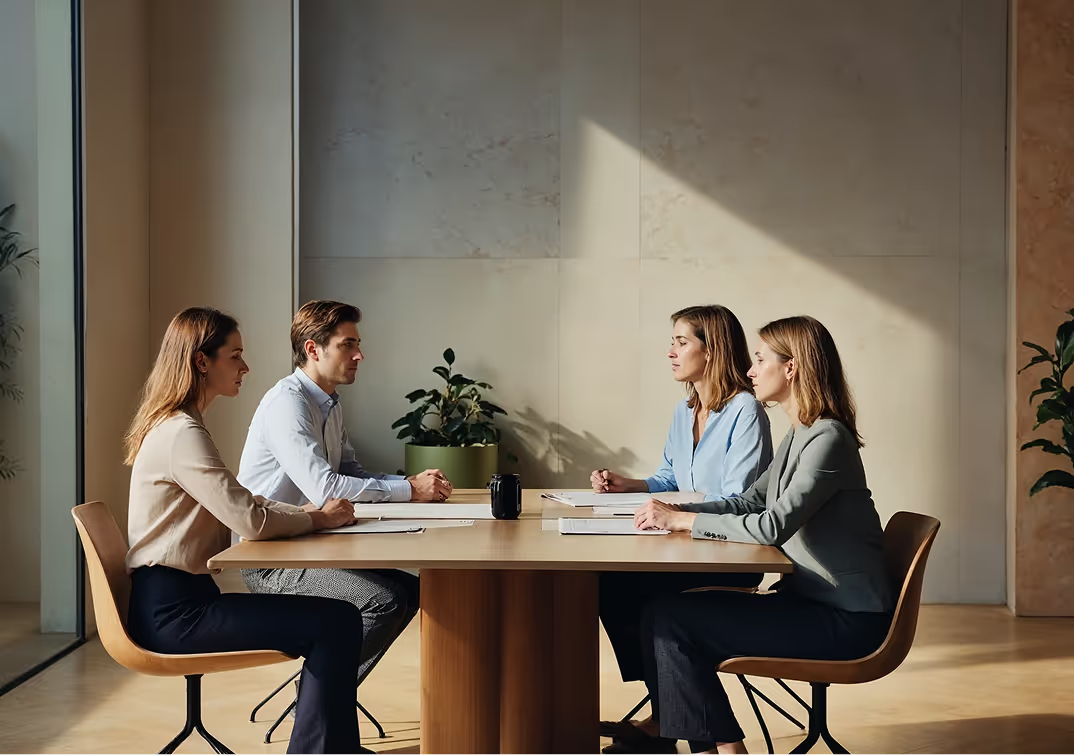
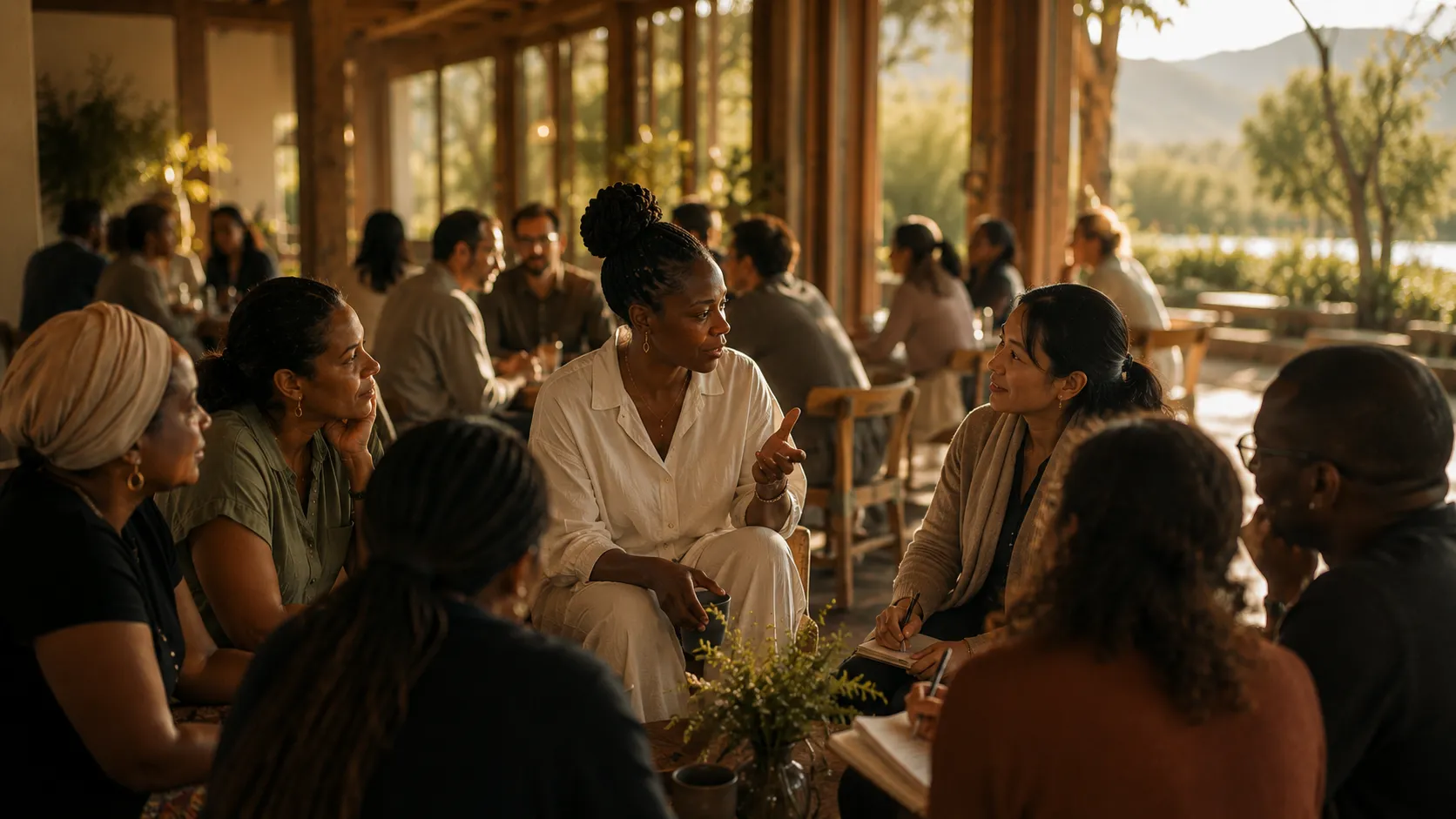
Children flourish when families, educators, researchers, communities, philanthropists, businesses and public institutions work together.

Over the years, Indaba has been shaped by extraordinary partnerships across education, research, philanthropy and community development.

Each contributed a piece of the puzzle.
Each helped reveal a larger truth: The future belongs to organisations that learn how to collaborate.

Not compete.
Not duplicate.

But align around what works.
2.9 WHAT WE LEARNED

The lesson that changed everything.

The lesson that changed everything.

After a decade in the field, one insight became impossible to ignore.

Children flourish when the adults around them flourish.

The challenge is not a lack of knowledge.

The challenge is creating systems capable of delivering that knowledge to every child.

This realization became the foundation for everything that followed.
The missing piece.

The missing piece.

If the science is clear, the solutions exist and the consensus is strong, what prevents quality from reaching every child?

For more than a century, extraordinary educators, researchers and practitioners have developed approaches that help children flourish.

The challenge is not knowledge.
The challenge is delivery.

How do we make excellence accessible?
How do we support millions of parents, caregivers and educators?
How do we preserve quality while reaching scale?

The answer is not a programme.
It is a system.